
As event-based platforms encounter heavy pushback internationally, Triplebet Limited, the corporate operator behind the Matchbook exchange, believes it has officially demonstrated a regulatory architecture that sets it apart from all major industry competitors.
The global race to successfully integrate next-generation prediction markets within regulated betting frameworks is accelerating at a rapid pace.
Dual Brand Strategy Unlocked Ahead of Tournament Opening
Just days before the FIFA World Cup 2026 gets underway, Abu Dhabi-based prediction market platform ADI Predictstreet has officially launched on the Matchbook exchange across the United Kingdom and Ireland. While the tactical timing of the rollout is commercially significant, the structural design behind the launch represents a massive industry milestone. With the arrival of the Abu Dhabi platform, Triplebet Limited now supports two entirely separate, competitive prediction market brands running simultaneously under a single, unified UK Gambling Commission (UKGC) operating license.
The first brand integrated into the system was easyBet Predictions, an exchange venture backed directly by easyJet founder Sir Stelios Haji-Ioannou, which successfully joined the platform earlier this year. According to Matchbook management, this dual-track deployment makes its platform the only regulated betting exchange globally to host multiple licensed prediction market brands within the same sovereign regulatory structure.
The innovative business arrangement provides an elegant answer to an increasingly vital question facing the modern iGaming vertical: how prediction market operators can scale efficiently while remaining fully compliant in strict, heavily scrutinized jurisdictions.
Sports Focus Bypasses Geopolitical Disruption
Unlike many of the highly public event platforms that have attracted severe regulatory scrutiny and judicial bans in recent months, ADI Predictstreet is designed to focus exclusively on mainstream sports markets. The company’s initial consumer offering centers entirely on the FIFA World Cup, enabling users to actively trade on real-time tournament outcomes, including definitive group-stage results, top goalscorer markets, and overall tournament winners.
This strict focus is notable at a time when generalized event-based prediction platforms continue to face intense legal challenges. Multiple European regulators have enacted severe bans against political and geopolitical contracts, forcing forward-thinking operators to explore alternative commercial approaches and isolated sports licensing models.
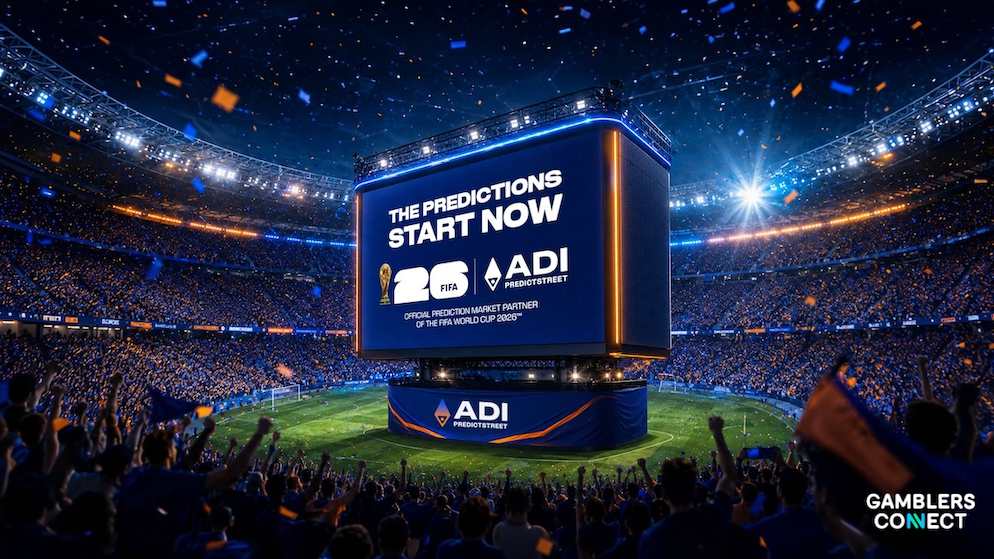
ADI Predictstreet enters the exchange landscape with substantial commercial momentum. The enterprise was announced as an official prediction market partner of the FIFA World Cup 2026 in April, shortly after securing vital regulatory approval from authorities in Gibraltar. Built on the advanced ADI Chain blockchain architecture, the platform officially launched its digital consumer face on June 8. It has already secured high-value strategic partnerships, including a specialized, co-branded World Cup marketplace alongside Fanatics Markets across 23 United States jurisdictions, paired with an extensive content syndication agreement with global sports streaming provider DAZN.
For the Matchbook network, however, the long-term corporate significance extends far beyond football tournaments. The company is actively positioning its proprietary exchange as a compliant, scalable backend infrastructure ready to support multiple third-party prediction market brands. This framework allows independent operators to launch rapidly under an established regulatory umbrella rather than pursuing independent, costly, and lengthy standalone licensing routes.
Matchbook Chief Executive Officer Ronan McDonagh emphasized that the dual-brand milestone demonstrates a scalable blueprint for the global sector:
“We already power easyBet Predictions in the UK, and with the addition of ADI Predictstreet at Matchbook we now operate the only exchange platform in the world running multiple licensed prediction market brands under a single regulatory framework.”
The multi-brand strategy aligns seamlessly with Matchbook’s long-term commercial ambitions inside the United States. Triplebet’s domestic US corporate partner, RSBIX LLC, has formally submitted a comprehensive application to the Commodity Futures Trading Commission (CFTC) to secure a designated exchange license—a structural move that could open the door to a significantly larger, high-volume derivatives market.
For now, the imminent World Cup tournament will provide the first high-volume test of the multi-brand architecture. If the platform smoothly handles the massive surge in trading activity expected during the competition, Matchbook will have effectively proven a scalable regulatory path for the future of the sector, showcasing how organizations can thrive within established regulatory frameworks.