The intense regulatory fight over the legal oversight of prediction markets has officially reached New Mexico, opening an aggressive new chapter in a growing constitutional dispute between state regulators and the federal government over who retains final authority to police event-based trading platforms.
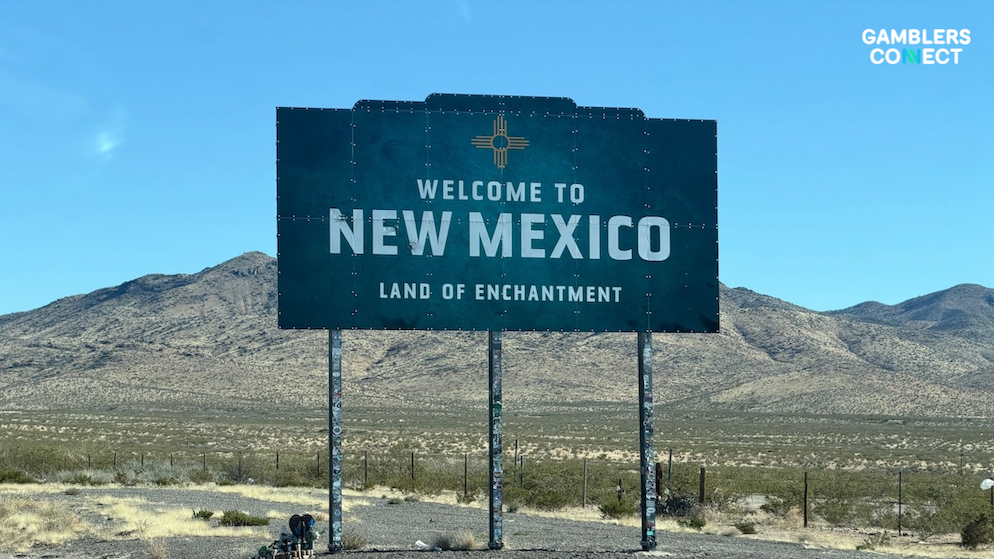
Days after the state of New Mexico filed a formal lawsuit against prediction exchange Kalshi, accusing the platform of operating unlicensed sports betting products, the Commodity Futures Trading Commission (CFTC) responded with aggressive legal action of its own
Federal Court Injunction Targets Governor and Attorney General
The federal regulator is actively seeking a federal court injunction to completely stop the state from applying localized gaming laws to financial exchanges operating under direct CFTC oversight.
New Mexico’s initial lawsuit, filed on June 4, argues that Kalshi’s sports event contracts are effectively sports wagers and should legally be treated the same as bets placed through licensed retail and mobile sportsbooks. State officials also alleged that the platform permitted users aged 18 to 20 to participate, despite New Mexico statutory law requiring gamblers to be at least 21 years old.
Rather than addressing the state-level allegations through local gaming commission channels, the CFTC moved aggressively into federal court. The agency sued New Mexico Governor Michelle Lujan Grisham, Attorney General Raúl Torrez, and members of the New Mexico Gaming Control Board, arguing that the state is attempting to illegally regulate financial products that fall exclusively under federal commodities law.
The federal regulator’s complaint centers on the legal status of event contracts, maintaining that these options qualify as swaps and related derivatives under federal law, therefore belonging within a regulatory framework established by Congress. Because Kalshi operates as a Designated Contract Market (DCM), the agency argues that oversight rests exclusively with federal authorities.
A Growing National Battle Over Derivatives Authority
New Mexico is not alone. The state has officially become the eighth separate jurisdiction drawn into the CFTC’s national campaign to defend its authority over prediction markets. Similar legal confrontations have emerged in Rhode Island, Wisconsin, Minnesota, New York, Arizona, Connecticut, and Illinois after state officials attempted to challenge or restrict the platforms. Federal regulators view those localized efforts as direct challenges to a longstanding system governing derivatives exchanges.
In announcing the federal lawsuit, CFTC Chairman Mike Selig argued that states are attempting to sidestep established federal law and judicial precedent by applying gaming statutes to federally regulated markets. The agency is asking the court to declare that state laws cannot be enforced against transactions conducted on CFTC-regulated exchanges and to permanently block New Mexico from pursuing further action against prediction market operators.
The legal fight arrives as the industry’s rapid expansion is forcing courts to confront a question that lawmakers never explicitly addressed: where the line sits between gambling and financial trading. That question gained another prominent voice this week when former SEC and CFTC Chairman Gary Gensler entered the debate. In an amicus brief filed with the Sixth Circuit Court of Appeals in a separate case involving Ohio regulators, Gensler challenged the CFTC’s interpretation of its authority. His argument focuses on the Dodd-Frank Act, the sweeping financial reform legislation enacted after the 2008 financial crisis.
Gensler contends that Congress designed Dodd-Frank to regulate financial instruments connected to economic risk and market stability, not contracts tied to sporting events. In his view, sports event contracts do not fit the traditional purpose of swaps because they are generally not used as tools for managing financial exposure. He also questioned the broader claim that Congress intended to remove states from the regulatory picture altogether, arguing that lawmakers never envisioned sports betting oversight being transferred from state governments to a federal commodities regulator.
The disagreement leaves courts with a highly consequential decision. If judges accept the CFTC’s position, prediction market operators could continue offering sports event contracts nationwide under a federal framework, even in states that view the products as gambling. If states prevail, platforms such as Kalshi may face a patchwork of local gaming laws and licensing requirements.