
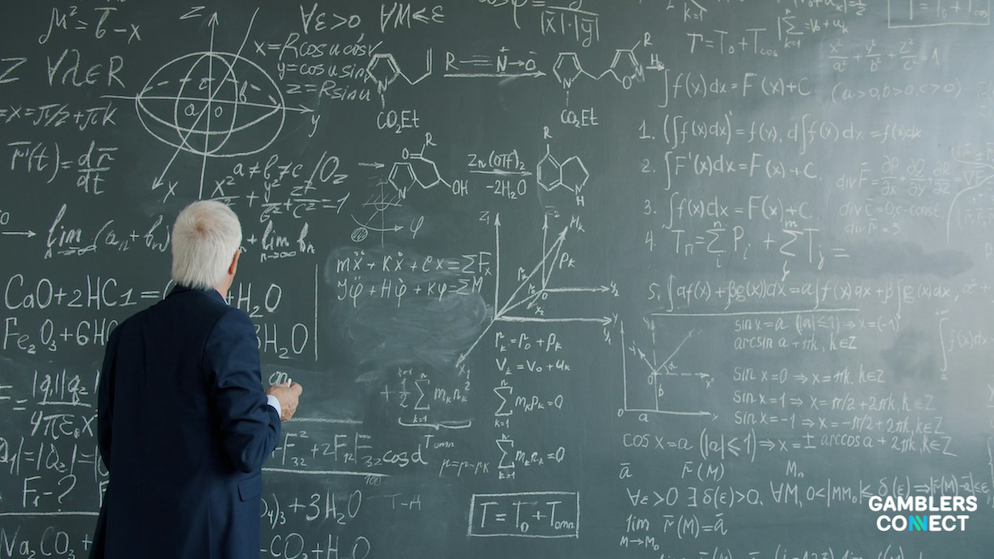
For a historic fourth consecutive international tournament cycle, Joachim Klement, a prominent German mathematician whose advanced predictive data models have become a highly anticipated talking point across football circles has identified a tournament champion before a single match has commenced.
If the computational data points prove correct once again, the upcoming campaign will culminate in the Netherlands capturing its first world title.
Analyzing the Macroeconomic Predictive Formula
The mathematical forecast is constructed by Joachim Klement, a respected investment analyst whose sports modeling has achieved legendary accuracy. Klement’s algorithms successfully identified Germany as the winner ahead of the 2014 World Cup in Brazil, correctly isolated France to secure the trophy in Russia in 2018, and accurately mapped out Argentina’s historic victory in Qatar in 2022.
The underlying predictive formula evaluates systemic factors that extend far beyond on-pitch tactical parameters, utilizing structural and economic variables to calculate on-field probabilities. The core data inputs incorporate sovereign economic metrics via gross domestic product (GDP) per capita, which Klement links directly to the quality of a country’s underlying sporting infrastructure, youth development pipelines, and training networks. The model further factorizes absolute population size, team world rankings, and the localized cultural significance of football within the fabric of each society.
Despite the model’s unblemished three-tournament tracking record, Klement remains noticeably skeptical regarding his own predictive outputs. He designed the framework originally as an academic experiment to illustrate the extreme difficulty of predicting any complex system with absolute mathematical certainty, rather than as a commercial betting system.
The 2026 World Cup data points forecast a heavy European presence in the closing knockout rounds, projecting that Ronald Koeman’s Dutch squad will eliminate Spain in the semifinals to face Portugal, which is tipped to advance past England on the opposite side of the bracket. However, Klement stresses that the entire probability model can be instantly shattered by the volatile, unpredictable nature of knockout football, including refereeing errors, unscripted injuries, changing tactics, and psychological pressure.
Breaking the Great Nearly Men Reputation
The Dutch national selection enters the competition carrying both a highly talented roster and the psychological weight of historical near-misses. The country has advanced to the World Cup final on three separate historical occasions, suffering heartbreaking defeats each time, earning a persistent reputation as international football’s greatest nearly-men.
The team’s official 2026 campaign commences on June 14 against Japan, with subsequent Group F fixtures scheduled against Sweden and Tunisia. For now, the analytics community continues to monitor the formula closely, as an exercise that began as a simple mathematical probability experiment commands global media spotlight.