
Last updated on February 16th, 2026
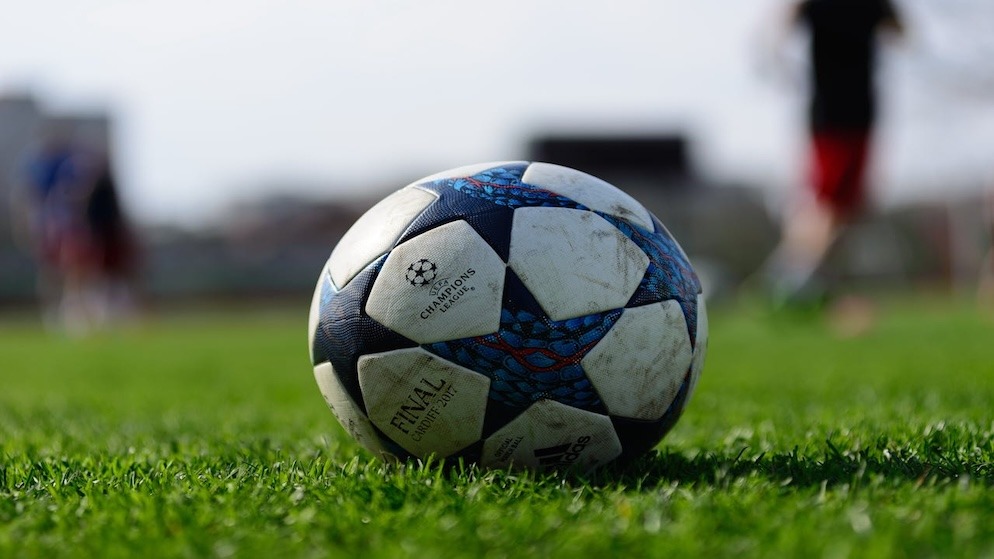
As the ultimate symbol of European football excellence, the Champions League ball remains the most recognizable piece of sporting equipment on the planet today in 2026. Every year, millions of fans and players alike seek out the latest Adidas Champions League ball to experience the same precision and prestige seen under the floodlights of the world’s most iconic stadiums.
This guide provides an exhaustive look at the technical specifications, cultural history, and future innovations of the Champions League ball, ensuring you have all the information needed to understand why this Champions League soccer ball continues to set the global standard for performance.
The 2026 Budapest Final: A New Era for the Champions League Ball
On February 9, 2026, the world was introduced to the latest masterpiece in football engineering: the Champions League football ball for the Budapest Final. This specific Champions League soccer ball celebrates the 25th anniversary of the partnership between UEFA and its official supplier, marking a quarter-century of the iconic star-panel design.
Technical Specifications of the 2025/26 Ball
- Surface Texture: The innovative PRISMA surface features a brand-new debossing pattern.
- Construction: Thermally bonded seamless panels to ensure a predictable flight path.
- Materials: High-grade polyurethane combined with bio-based materials like corn fiber and sugar cane.
- Bladder: A resilient butyl bladder designed for maximum air retention.
- Sustainability: 100% water-based inks and recycled polyester layers.
Official Dimensions and Performance Standards
The current Champions League football is engineered to the strict FIFA Quality Pro standard, the highest certification for professional play. To be used in the tournament, every Adidas Champions League ball must adhere to these precise dimensions:
- Circumference: Between 68.5 cm and 69.5 cm.
- Weight: 420 to 445 grams at the start of the match.
- Pressure: 0.8 to 1.1 atmosphere.
- Water Absorption: Less than 0.1% increase in weight when used in wet conditions.
Sustainable Engineering: The Science of Bio-Based Layers
The 2025/26 and 2026 Final versions of the Champions League football represent a breakthrough in sustainable sports technology. Unlike previous generations that relied heavily on virgin petroleum-based plastics, the modern Champions League soccer ball incorporates a complex hierarchy of bio-based materials.
Specific Bio-Based Materials and Their Functions
- Corn Fiber and Sugar Cane: These are integrated into the CTR-CORE and the internal foam layers. Corn fiber provides a lightweight yet durable structural support, while sugar cane-derived polymers help create a more resilient rebound effect without the carbon footprint of traditional synthetic rubbers.
- Wood Pulp: Natural cellulose fibers from wood pulp are used within the inner carcass layers. This material provides the necessary tensile strength to maintain a perfectly spherical shape under the high-pressure environment of professional play.
- Renewable Natural Rubber: The zero-waste butyl bladder is reinforced with sustainably sourced natural rubber, ensuring that the Champions League football ball maintains its air retention longer while remaining environmentally friendly.
- Recycled Polyester and Rayon: The outer shell and backing fabrics utilize 100% recycled polyester (PES) and rayon imitation leather, diverting textile waste from landfills and repurposing it into the most elite Champions League balls ever produced.
History of the Champions League Balls: From 1955 to 2026
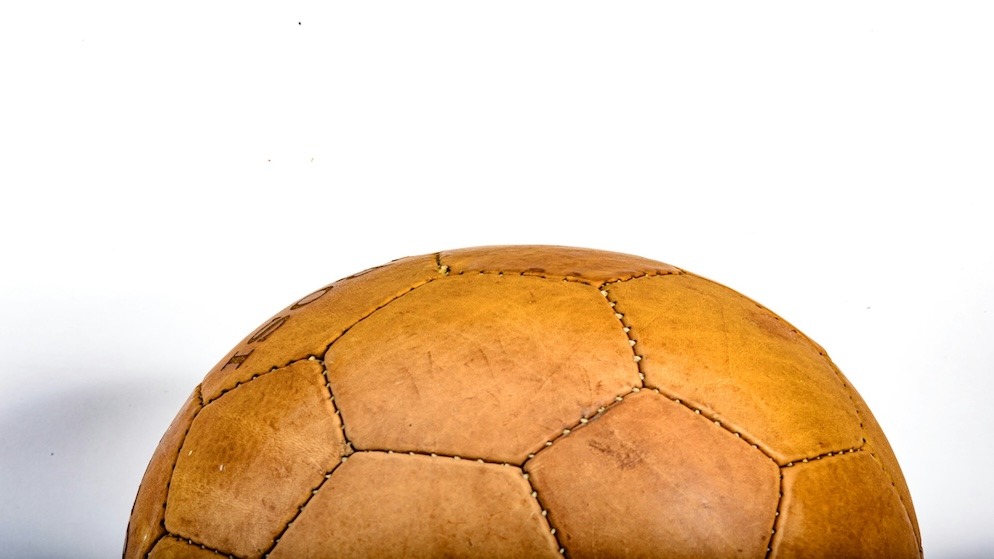
The journey of the Champions League ball began long before the star-panel design became a global icon. In the inaugural 1955/56 European Cup season, there was no standardized Champions League soccer ball. In that very first edition, the ball was a classic 18-panel hand-stitched leather design, often in a brown or tan color, provided by local manufacturers. These early Champions League balls were heavy and absorbent, significantly changing in weight throughout a match.
It wasn’t until the modern era that the Adidas Champions League footballball began its exclusive reign. For decades after the initial 1955 tournament, Adidas provided various models such as the Telstar and the Tango for European competition. The first official Champions League ball under the “Finale” branding was introduced for the 2000/01 season. Before this, from 1998 to 2001, Nike provided the official Champions League football, utilizing their GEO technology.
Dimension Comparison: 1955 vs. 2026
While the beautiful game has remained fundamentally the same, the Champions League balls have undergone a radical physical transformation to accommodate the speed of the modern era.
| Feature | 1955 European Cup Ball | 2026 Champions League Ball |
| Material | Heavy, genuine cowhide leather. | High-tech bio-based polyurethane. |
| Weight (Dry) | Approx. 410g – 450g. | Precisely 420g – 445g. |
| Weight (Wet) | Could increase by 20% or more. | Increases by less than 0.1%. |
| Circumference | Often irregular, approx. 68-71cm. | Strictly 68.5cm – 69.5cm. |
| Panels | 18 hand-stitched strips. | Thermally bonded star-shaped panels. |
Comparison of Ball Manufacturers in Competition History
Throughout the years, there have been only two official manufactures responsible for providing the UEFA Champions League with the balls.
- Local Manufacturers (1955 – Early 1970s): No unified brand. Hand-stitched leather balls with varying weight and size standards.
- Adidas (Early 1970s – 1998): Standardized 32-panel models like the Telstar and Tango. This was the era of the classic black-and-white hexagon design.
- Nike (1998 – 2001): Provided the GEO Merlin, which was marketed as the roundest and fastest Champions League soccer ball ever made at that time.
- Adidas (2001 – 2026): The “Starball” era. Since the 2001 final in Milan, every Champions League football ball has featured the thermally bonded star-panel construction.
Comparison: Star-Panel Patterns of the Last Five Finals (2022–2026)
The design of the ball changes every season to reflect the identity of the host city, but the most significant shift in recent years has been the return to “tip-to-tip” star panels.
- 2022 Saint Petersburg/Paris: Featured the offset star pattern used since 2019, with large gaps between the stars. It was eventually redesigned with a peace message.
- 2023 Istanbul: Inspired by Turkish and Ottoman art, this ball also utilized the offset star configuration with blue, gold, and silver graphics.
- 2024 London: This ball marked a massive aesthetic shift, returning to the classic “tip-to-tip” star layout for the first time since 2019.
- 2025 Munich: Continuing the “tip-to-tip” trend, the Munich ball featured a “Celestial Destiny” theme with hand-drawn zodiac signs.
- 2026 Budapest: The 25th-anniversary ball features a moodier, metallic purple base and retains the “tip-to-tip” star panels with Art Nouveau-inspired motifs.
The Visionaries: Who Designed the Budapest 2026 Ball?
While the engineering of the Adidas ball is handled by a massive team of materials scientists in Herzogenaurach, Germany, the visual identity is crafted by elite graphic designers. The 2026 Budapest Final ball was designed to celebrate the dual identity of the host city, “Buda” and “Pest.”
The creative team at Adidas, in collaboration with local Hungarian artists, integrated lion and dragon motifs into the panels. These are symbols of strength and guardianship taken from Budapest’s iconic architecture. The metallic purple “chameleon” finish, which shifts color under stadium lights, was chosen to reflect the vibrant nightlife and Art Nouveau history of the city.
The Evolution of the Starball: A Legend in Progress
Throughout the history of the tournament, the Champions League ball has evolved to meet the needs of elite athletes. Whether you are looking for the Champions League balls used in historical finals or the newest Champions League football ball, the quality remains unmatched. Professional players prefer the Champions League soccer ball because it offers a “true” flight, meaning the ball doesn’t knuckle or dip unpredictably.
For collectors, the Adidas Champions League ball is more than just equipment; it is a piece of history. Each final since 2008 has featured a unique design inspired by the host city, from the “Finale Roma” to the 2026 “Budapest Final” ball.
The Pricing of Excellence
Owning an official Adidas ball comes with a premium price tag reflecting its professional-grade technology. As of 2026, the retail price for the “Pro” match version, the exact model used by the players on the pitch, is typically set at $170.
To cater to a wider audience, Adidas offers several tiers of the Champions League balls:
- Pro (Official Match Ball): $170
- Competition (High-quality, semi-pro): $60
- League (Stitched, for regular play): $40
- Club/Training (Durable and affordable): $25
- Mini (Souvenir size): $15
Frequently Asked Questions (FAQs)
- What makes an official Champions ball different from a replica? The official match ball uses thermally bonded panels and high-tech textures, whereas replicas are usually stitched and made from lower-grade synthetic materials.
- How much does a professional Champions League football weigh? A standard size 5 ball weighs between 420g and 445g at the start of the match according to FIFA Quality Pro standards.
- Who has supplied the most Champions League balls? Adidas has been the exclusive supplier since 2001, marking 25 years of partnership in 2026.
- Can I use the Champions League soccer ball on all surfaces? While the pro-grade ball is designed for natural grass, the butyl bladder makes it resilient enough for high-quality artificial turf.
Final Thoughts
The Champions League ball is the heartbeat of European football. From the first leather bladders of 1955 to the high-tech, bio-based Adidas Champions League footbball of 2026, the evolution has been remarkable. As we look forward to the final in Budapest, the Champions League soccer ball stands as a testament to how technology and tradition can merge to create the perfect game.