
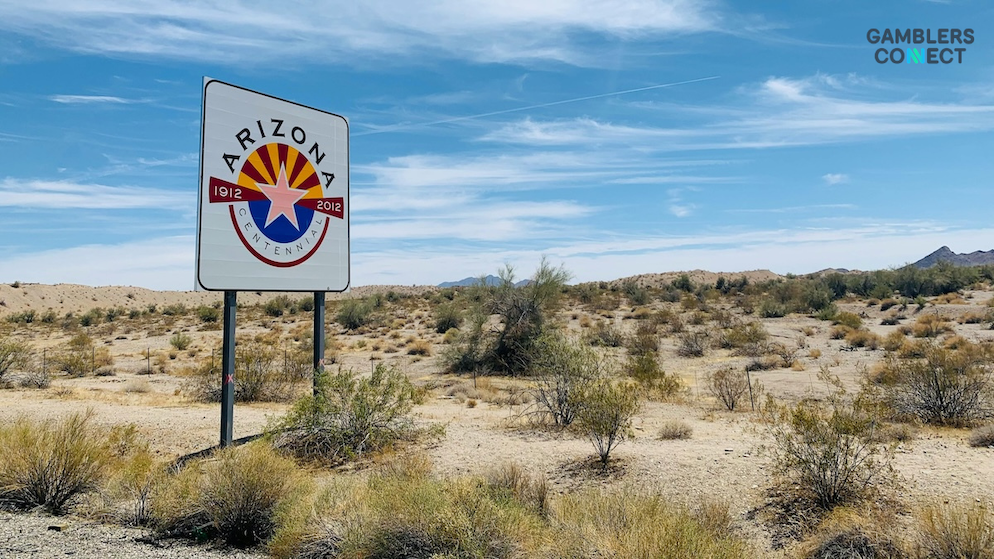
The Arizona Department of Gaming (ADG) has officially announced that it will begin accepting formal applications for a new allocation of event wagering licenses starting June 26, 2026. The high-stakes regulatory window will close strictly on July 10, 2026, at 5:00 PM local time.
Restructuring the Southwestern Market Matrix
According to the state regulator, the application pipeline includes at least one license reserved explicitly for Arizona Tribes and another designated for Arizona Sports Franchises. The department issued a direct warning to interested operators, stating that applicants must submit completely finalized documentation within the set 14-day window to be considered for review.
Arizona’s sports betting arena is reopening its doors to new applicants for the first time since June 2024, with six competitive operational licenses up for grabs. When state lawmakers originally legalized event wagering in 2021, they instituted a firm cap of 20 total licenses, split evenly between indigenous tribal entities and professional sports franchises. Over the last two years, however, the volume of active operators has contracted significantly, leaving just 14 brands currently functioning in the state.
A multi-brand wave of exits has reshaped the local landscape as companies modified their broader North American capital allocation strategies. Brands like Betfred, SuperBook Sports, Betway, Fubo Sportsbook, TwinSpires, Unibet, and WynnBet completely retracted their Arizona products, while SaharaBets lost its footprint after the Arizona Coyotes hockey franchise relocated to Utah. Despite these individual retreats, the ecosystem remains dominated by tier-one giants including DraftKings, FanDuel, BetMGM, Caesars, bet365, and Fanatics.
Since its inception, the southwestern market has generated massive handle, surpassing $33.9 billion in total lifetime wagers and delivering nearly $180 million in privilege fees directly to state infrastructure budgets. In 2025 alone, licensed sportsbooks yielded more than $713 million in revenue, cementing Arizona’s position as the sixth largest sports betting handle in the United States.
The Federal Injunction Patchwork
The timing of the ADG’s new licensing round occurs amid intense national friction as decentralized prediction markets rapidly scale up and reshape the broader event wagering ecosystem. Platforms like Kalshi and Polymarket operate under direct federal approval from the Commodity Futures Trading Commission (CFTC). Because they are classified legally as financial asset exchanges, these prediction platforms argue that federal statutory law entirely overrides state-level gambling frameworks, allowing them to market event contracts in all 50 states.
The macroeconomic data highlights how disruptive these platforms have become. While traditional sportsbooks contribute heavily to state-level infrastructure budgets, navigating tax rates as high as 51% in jurisdictions like New York, prediction platforms do not pay state-level gaming taxes. The American Gaming Association (AGA) estimates that state governments and tribal nations lose over $1 billion annually in tax revenue due to this regulatory asymmetry. Illustrating this shift, Kalshi reported a staggering $3.3 billion in trading volume during the 2026 NCAA March Madness tournament, perfectly matching the $3.3 billion wagered across all legal U.S. sportsbooks combined.
Arizona previously attempted to test its judicial authority against these platforms by initiating prosecution procedures against Kalshi for operating without a local ADG license. However, earlier this month, a federal judge issued a decisive preliminary injunction blocking Arizona from enforcing its localized gambling laws against CFTC-regulated exchanges. The court ruled that event contracts qualify strictly as financial swaps under the Commodity Exchange Act, placing them solely under federal jurisdiction.
The presiding magistrate noted that allowing individual states to pursue custom enforcement actions would create the exact “inconsistent regulatory patchwork that Congress intended to avoid.” This conflict has triggered a wave of litigation across multiple circuits; the Third Circuit recently sided with Kalshi in New Jersey, while the Ninth Circuit is expected to rule shortly. Concurrently, the CFTC and the Department of Justice have initiated lawsuits against alternative states, including Connecticut, Illinois, New York, Wisconsin, and Rhode Island—to vigorously defend federal supremacy.
Consumer Protection Remains Paramount
Cliff Holden, Assistant Director of Certification and Licensing at the ADG, reiterated their firm focus on maintaining a safe betting ecosystem:
“As the state regulator, we remain dedicated to consumer protection and a thorough licensing review process. We look forward to receiving new applications for regulated event wagering.”