
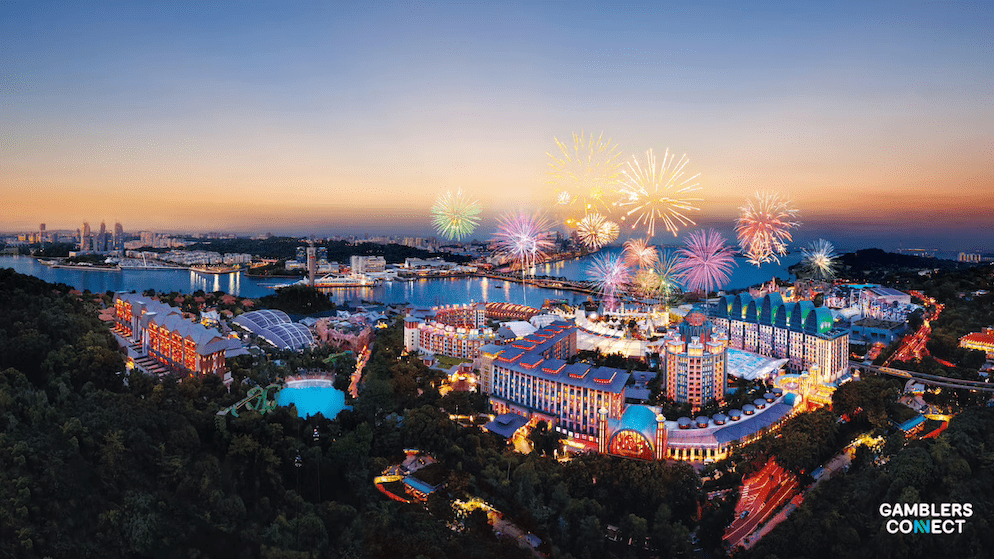
Resorts World Sentosa (RWS) is positioning 2026 as a critical proving ground to redefine its market identity. Moving away from the upscale positioning of its primary competitor, Marina Bay Sands, RWS aims to establish itself as the premier “destination for spending time with family and friends”.
CEO Lee Shi Ruh, who assumed the helm in June 2025, is driving a strategy that prioritizes steady, innovative refreshes over quick attraction hops to cultivate loyalty among both new visitors and regulars.
Licensing Pressure and Expansion Plans
This strategic shift comes as RWS navigates a tighter regulatory landscape. The renewal of its casino license in November 2024 was granted for only a two-year term, shorter than the typical three-year period, due to lackluster tourism statistics in 2023.
With the next review scheduled for 2026, the resort is under pressure to regain credibility before seeking a renewed license in February 2027. To support this, the RWS 2.0 master plan is underway, an SG$6.8 billion expansion that will increase floor area by 50%, focusing heavily on non-gaming developments.
New Attractions and Financial Growth
The expansion includes major non-gaming additions such as the Singapore Oceanarium, Minion Land at Universal Studios, and the Weave lifestyle mall. Interim projects, including the 700-room luxury hotel complex and The Laurus, are designed to shift the visitor mindset from pure gambling to social engagement.
Lee’s vision is to transform former gamblers into participants in “social happenings taking place frequently, incorporating gaming, food, beverages, family time, and socializing with friends“.
Financially, the resort is showing promise. In Q3 2025, gaming revenue rose 22% year-on-year to SG402.96 million, while non−gaming revenue climbed 7247.33 million. Net profit after tax also saw a healthy increase of 19%. With new COO Chen Si joining to manage operations, RWS is aggressively scouting talent to sustain this momentum through its 2030 completion target.