
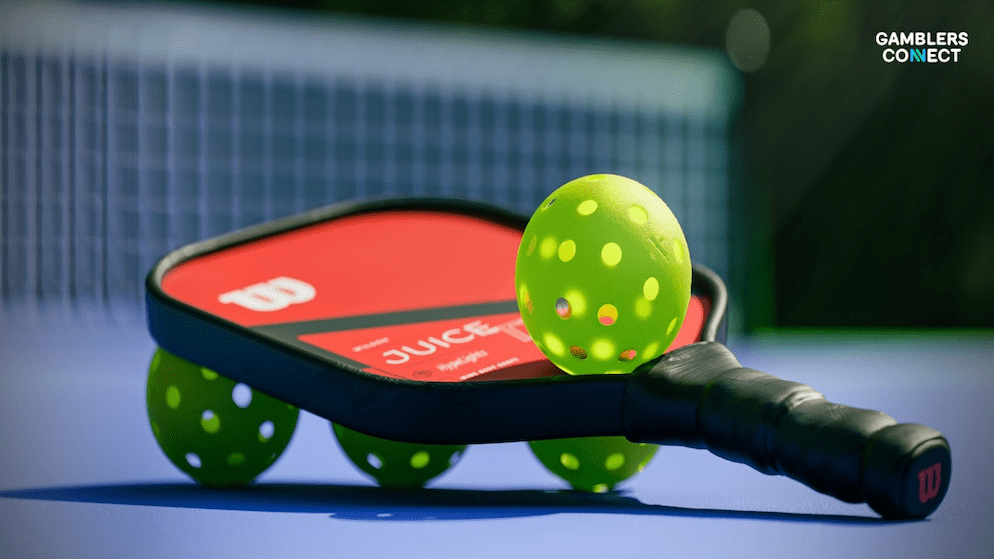
Pickleball has evolved from a local pastime into a high-octane global sport, driven by its unique blend of strategic “dinking” and rapid-fire volleys. Central to this growth is the standardized pickleball court dimensions, which allow for intense competition within a footprint much smaller than a traditional tennis court. Understanding pickleball court dimensions is the fundamental first step for any player looking to master court positioning and tactical play.
The Blueprint: Pickleball Court Dimensions and Layout
The standardized pickleball court dimensions are strictly regulated to ensure a consistent experience across all global facilities. This uniformity in pickleball court size allows players to transition seamlessly from indoor gymnasiums to professional outdoor arenas.
Standard Pickleball Court Size Specifications
To meet official regulation standards, a pickleball court size must adhere to these precise measurements:
- Total Court Length: 44 feet (13.41 meters) for both singles and doubles play.
- Total Court Width: 20 feet (6.1 meters).
- The Non-Volley Zone (The Kitchen): A critical 7-foot area extending from the net on both sides.
- Service Areas: Each side contains two service courts measuring 10 feet wide by 15 feet long.
- Recommended Overall Footprint: A total area of 30′ x 60′ is advised to allow for a safe 10-foot “over-run” buffer.
The Role of the Pickleball Net
The pickleball net is a specialized piece of equipment designed to favor accuracy over raw power.
- Height: A regulation pickleball net stands 36 inches high at the sidelines and 34 inches at the center.
- Construction: Most modern nets use a heavy-duty mesh with a vinyl headband and a center strap to maintain the required center height.
Padel vs Pickleball: An In-Depth Historical and Cultural Comparison
The ongoing debate of padel vs pickleball centers on two sports that share a common social DNA but offer vastly different athletic experiences. As we enter 2026, both sports are vying for global dominance in the “social racket” sector.
A Tale of Two Origins
The history of padel vs pickleball begins in the mid-20th century, born from a desire for accessible family entertainment.
- Pickleball (1965): Invented on Bainbridge Island, Washington, by Joel Pritchard, Bill Bell, and Barney McCallum. The sport was famously named after the “pickle boat” in rowing, a boat of mismatched oarsmen, reflecting the game’s hybrid nature. It started with improvised ping-pong paddles and a perforated plastic ball on a badminton court.
- Padel (1969): Founded by Enrique Corcuera in Acapulco, Mexico. Corcuera didn’t have enough space at his home for a tennis court, so he enclosed a smaller court with walls. This created a game where the ball could be played off the walls, much like squash, but with the net-based strategy of tennis.
In-Depth Comparison: Padel vs Pickleball
The ongoing debate of padel vs pickleball centers on two sports that share a common social DNA but offer vastly different athletic experiences. Both have seen meteoric rises in the 2020s, yet they evolved from distinct cultural backgrounds and offer unique tactical challenges.
A Tale of Two Origins: The History of Padel vs Pickleball
The history of padel vs pickleball begins in the mid-20th century, born from a similar desire for accessible, family-oriented entertainment.
- Pickleball (1965): Invented on Bainbridge Island, Washington, by Joel Pritchard, Bill Bell, and Barney McCallum. The sport was born out of a rainy summer afternoon using improvised gear—a badminton court, ping-pong paddles, and a perforated plastic ball. It was famously named after the “pickle boat” in rowing, referring to a boat made of mismatched oarsmen, which reflected the game’s hybrid nature.
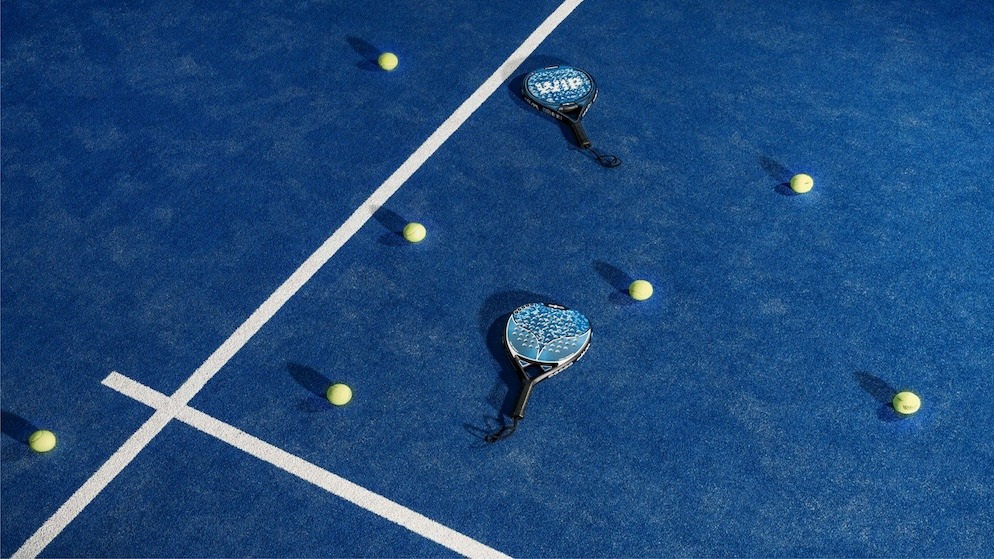
- Padel (1969): Founded by Enrique Corcuera in Acapulco, Mexico. Corcuera didn’t have enough space at his vacation home for a full tennis court, so he enclosed a smaller court with walls. This created a strategic game where the ball could be played off the walls, much like squash, but with the net-based strategy of tennis.
Global Popularity and Cultural Shifts
While both are booming, the “winner” in the padel vs pickleball popularity contest often depends on where you are in the world:
- North American Dominance: Pickleball remains the undisputed leader in the USA and Canada, with over 30 million active players. However, search interest saw a slight 10% dip in late 2025 as some regional markets reached saturation.
- The European and Middle Eastern Surge: Padel is the second most popular sport in Spain (after soccer) and has seen a 30% increase in facility construction across Italy, the UAE, and Sweden in 2025/2026.
- Emerging Frontiers: Asia is currently the most contested region; over 800 million people in Asia have now been exposed to pickleball, with India and Vietnam leading the charge.
1v1 Feature Breakdown: Padel vs Pickleball
| Feature | Pickleball | Padel |
| Court Style | Open court with standard lines | Enclosed by glass and mesh walls |
| Ball Type | Perforated plastic (26-40 holes) | Low-pressure, felt-covered tennis ball |
| Primary Strategy | Finesse, dinking, and “Kitchen” control | High-energy rebounds and wall play |
| Entry Cost | Low; high availability of public courts | Higher; complex court builds lead to higher fees |
| Averge Match | Mixed age groups; high social focus | Skews younger; highly competitive culture |
The Professional Landscape: Stars and Venues of 2026
Pickleball is no longer just a hobby; it is a professional industry with millions in prize money. In 2026, the sport’s demographic has shifted significantly, with the average avid player age now in the mid-30s.
Where the Sport is Played Most
- North America: Remains the global leader, with Florida, California, and Arizona hosting the largest clusters of courts.
- Asia: A massive surge in participation is seen in India and Vietnam, where urban developers are installing courts on rooftops.
- Europe: The UK and Australia are currently seeing participation growth rates of over 70% annually.
Top Professional Players of 2026
The Major League Pickleball (MLP) and PPA Tour are headlined by these icons:
- Ben Johns: The “G.O.A.T.” of the modern era, known for his incredible court IQ and consistency.
- Anna Leigh Waters: A phenom who has held the #1 spot since her mid-teens, dominating with aggressive power.
- Federico Staksrud: A rising international star who has challenged the American status quo in 2025/2026.
Best Pickleball Paddles 2025 for Power Hitters: A Comparative Review
For players who want to dominate with speed and aggressive overheads, selecting the right paddle is crucial. The best pickleball paddles 2025 utilize thermoformed edges and carbon fiber faces to maximize “pop”.
| Paddle Model | Core Tech | Best For | Verdict |
| Selkirk Vanguard Control | QuadCarbon Fiber | Controlled Power | Excellent for those who want power without losing “touch”. |
| Joola Perseus 3 | Charged Carbon | Aggressive Drives | The top choice for baseline power hitters. |
| Gearbox Pro Power | Coreless Technology | Pure Speed | Offers the highest “swing weight” for maximum velocity. |
Essential Gear and Maintenance
Performance within the standard pickleball court size is often determined by your lateral agility and equipment quality.
- Pickleball Balls: Always match your ball to your environment. Outdoor pickleball balls have 40 small holes to combat wind; indoor balls have 26 larger holes for better bounce on wood surfaces.
- Pickleball Bags: A dedicated pickleball bag or high-capacity pickleball bags protect your carbon fiber paddles from heat, which can degrade the core.
- Footwear: The best pickleball shoes are court-specific.
- Pickleball Shoes for Men: Reinforced for high-impact lateral slides.
- Pickleball Shoes for Women: Often feature enhanced mid-foot stability for quick pivots at the net.
The Economics of the Game: Sessions and Scheduling
As court demand outstrips supply, the use of a digital pickleball scheduler has become standard in 2026.
- Pricing: A high-end pickleball set (paddles and balls) typically ranges from $150 to $300.
- Court Booking: Most public and private facilities now utilize a pickleball scheduler app. This helps players organize games within the pickleball court size they prefer and find players of similar skill levels.
Final Thoughts
As we move through 2026, both pickleball and padel are transitioning from social trends into structured, professional ecosystems. While pickleball holds a structural advantage in “deployability”, reusing existing basketball and tennis courts, padel is winning the “glossy” battle in urban landscapes and high-end resorts.
The next 12 months will be defined by technological integration, such as smart paddles with built-in sensors and AI-enhanced coaching apps. For the average player, the future means more indoor facilities, corporate leagues, and specialized gear like 12K carbon fiber paddles. Whether you are booking through a pickleball scheduler or debating padel vs pickleball at the clubhouse, the movement toward accessible, high-energy recreation is only just beginning.
FAQs
Can I play pickleball on a tennis court? Yes, but you must adjust the lines to the 20′ x 44′ pickleball court dimensions. You can typically fit four pickleball courts on one tennis court.
What is the “Double Bounce Rule”? After the serve, each side must let the ball bounce once before any volleys are allowed. This rule prevents serve-and-volley dominance.
Why do I need specific pickleball shoes for women or men? Running shoes are designed for forward motion. The best pickleball shoes provide lateral support and non-marking soles essential for court play.