
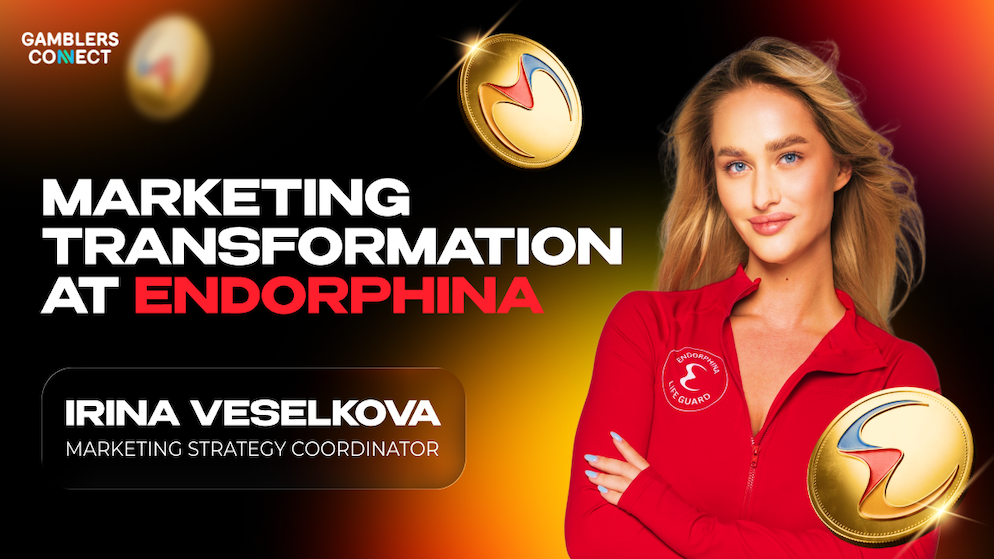
In the hyper-competitive landscape of modern iGaming, the bridge between creative vision and operational reality is often where battles are won or lost. We recently sat down to map the strategic career trajectory of Irina Veselkova, a pivotal figure whose expertise in high-stakes coordination has become the backbone of her success in this fast-paced sector.
Currently serving as the Marketing Strategy Coordinator at the renowned slot developer Endorphina in Prague, Irina’s story is not just one of climbing the corporate ladder, but of effectively restructuring it. Her professional journey offers a rare, detailed look into the sophisticated blend of artistic creativity, rigid project management, and data-driven decision-making required to excel in premium B2B marketing.
From navigating regulatory hurdles to orchestrating large-scale experiential events, Irina reveals what it truly takes to turn a chaotic workflow into a streamlined engine for growth.
Industry Entry and Specific Role
Ms. Veselkova transitioned into the specialized B2B sector of iGaming from a background requiring high-stakes coordination and human interaction. The Case Study begins by exploring the motivational drivers behind this career shift and the unique factors that led her to join the innovative team at Endorphina.
Q: Could you tell us what brought you into the iGaming industry, and specifically to Endorphina?
Irina Veselkova: Like most people, I ended up here more or less by chance. I wasn’t intentionally looking for jobs in iGaming and, to be honest, I didn’t even know this industry existed until I found myself in it.
Once I started working, I gradually got to know the business, its pace, the fact that there are conferences, business trips,and that it’s such an international field. Since I studied international business, it was exciting to finally work in something that was, in a way, close to my degree. I liked that iGaming is somewhat related to IT, but at the same time has a lot of creativity, innovation, and global interaction with people from all over the world. So at first, I was just looking for a job and ended up in iGaming by chance.
Joining Endorphina was already less accidental. I was actively looking for new opportunities, and I got recruited.
At that time, I was finishing university, working on my thesis, and also working as an assistant to the owner of several businesses. I stayed in that role for about two and a half years. Eventually, it became a bit monotonous, plus the company was relocating to another country, and I didn’t want to move. That’s when I decided to stay in the Czech Republic and look for something more serious, stable, and global.
Endorphina was exactly that – stability, long-term growth, and a strong status in the market. I already knew the company,its products, and had seen some of their creative, bold solutions, which really attracted me. So, when I got recruited by Endorphina, the decision was pretty clear.
Evolution of the Marketing Structure
Upon joining Endorphina, Ms. Veselkova identified a need for structural transformation within the marketing department. This section details her journey from operational coordination to leading a strategic redesign of the team to align with the company’s scaling ambitions.
Q: How did you come to the position of Marketing Strategy Coordinator, and what was happening in the company when you joined?
Irina Veselkova: When I joined the company, it was entering a new stage of development. The owners wanted to be more involved in daily processes and bring a fresh perspective to how things were organized. My role at first was very operational – helping to coordinate, connect people, and make sure workflows were running smoothly.
After a few months, it became clear that the marketing department needed to be reimagined to reflect the company’s new ambitions. I was asked to take on this challenge, and for me it was an exciting opportunity. I redesigned the structure,expanded the team, and started shaping marketing in a way that could better support the company’s growth and position us more strongly in the market.
It was a demanding but rewarding process – building something new almost from the ground up. And today, I’m proud that the results are visible not only internally but also externally: our marketing is much stronger, more dynamic, and aligned with the company’s vision.
The Coordinator Role Defined
The role of Marketing Strategy Coordinator is multifaceted, requiring the synchronization of distinct units such as PR, Affiliates, and Events. Here, Irina defines the scope of her responsibilities and how she weaves separate departmental threads into a unified brand strategy.
Q: What does your work as a Marketing Strategy Coordinator involve?
Irina Veselkova: In short, my role is to build the company’s marketing strategy and coordinate the work of different teams. We operate in small units: affiliates, SMM, events, and PR. Each team focuses on its own tasks, and my job is to connect them all into a single strategy.
I make sure that all activities come together into a coherent picture: exhibitions, game promotion, media presence, and social networks. My job is to tie all the dots and turn separate actions into a unified brand strategy.
Formally, my position is Marketing Strategy Coordinator; although in practice I often act as Head of Marketing. I think at first the company was being cautious: I was only 25 and had no previous experience in such a role. But for me, the most important thing is that I was given this chance and the trust to deliver results. The job title itself is secondary.
Operational Focus and Communication
Effective leadership involves managing diverse tasks while maintaining team cohesion. In this response,Irina breaks down her daily priorities, highlighting why communication serves as the backbone of her workflow and how she mitigates burnout through task variety.
Q: What tasks take up most of your time?
Irina Veselkova: Honestly, there isn’t one particular task that takes up all of my time. My work is very diverse, and I try to structure my schedule in a way that lets me handle different things — this helps me avoid fatigue and burnout. If I get stuck on one process, I can switch to something completely different, and often that gives me the solution I was looking for.
Probably the thing that takes the most time is calls. It’s important to constantly give feedback, discuss tasks, listen to the team, and make sure everyone feels comfortable in the process. If someone drops out or holds on to frustration, things won’t work. So communication is a really big part of my job.
But overall, it’s the variety that makes this role exciting: I work with different teams, and every day the tasks can be completely different.
Talent Acquisition Strategy
Hiring for the iGaming sector requires identifying candidates who possess both professional competence and genuine enthusiasm. Irina outlines the specific criteria she uses to build a proactive team, emphasizing the importance of independent thinking over passive agreement.
Q: What qualities do you focus on when hiring a team for an Endorphina, and are there any industry-specific considerations?
Irina Veselkova: There are people who fit and people who don’t, especially considering the specifics of the industry.Hiring is challenging, and I’m not an expert, but over this past year, we’ve had both mistakes and successful hires, found together with our recruiting team. The market currently allows us to choose, but decisions must be based on specific criteria.
For me, it’s important that the person is genuinely interested in their work, that their “eyes light up” with enthusiasm.Secondly, they need to be able to stand their ground. If a candidate only nods and agrees, that’s not ideal. I want someone who can propose alternatives, discuss ideas, and actively participate in brainstorming. When there’s discussion, it leads to high-quality, well-rounded work, rather than the output of a single individual.
If a person is engaged and passionate about their work, my role becomes more about coordination: ideas come naturally,and the process flows dynamically. If there’s no interest, further progress becomes impossible.
Guidance for Aspiring Professionals
For those entering the fast-paced world of iGaming, technical skills must be paired with the right mindset.Irina offers actionable advice for young professionals, stressing the value of curiosity, continuous learning, and the adoption of modern tools like AI.
Q: What advice would you give to young professionals who want to develop in marketing and project management in iGaming?
Irina Veselkova: First of all, embrace the opportunities iGaming has to offer – it’s an exciting, innovative industry where providers play a key role in shaping the future of entertainment. The key is to take responsibility, be curious, proactive,and ready for challenges.
In marketing, it’s important to keep learning, develop creativity, and be able to analyze results. If you have the willingness to work and learn new things, it will always be valued by management, and hands-on experience with modern tools,including AI, will only help you grow faster and more effectively.
Personal Recharge and Creativity
Sustaining high performance requires disciplined recovery and fresh perspectives. Here, Irina shares her personal strategies for maintaining mental clarity, from physical discipline in sports to the revitalizing power of travel and cultural exploration.
Q: Where do you get new ideas, and how do you recharge?
Irina Veselkova: Sports really help clear my mind and keep me disciplined – whether it’s running, lifting weights,dancing, or swimming, it’s important to find what you enjoy. Physical activity teaches you to stay consistent and do what needs to be done, even when you don’t feel like it.
A change of scenery and traveling also helps – for example, during a two-and-a-half-week vacation, I visited seven countries, which gave me a real reset and fresh perspectives. If traveling isn’t possible, meeting friends, going to the cinema, or simply taking walks works just as well. The key is movement and shifting your perspective – it energizes you,helps you think creatively, and find unconventional solutions both at work and in life.
Measuring Experiential ROI
Moving beyond digital metrics, this question addresses the challenge of quantifying the success of large-scale physical events. Ms. Veselkova explains Endorphina’s approach to evaluating Return on Investment through a mix of emotional engagement and digital ripple effects.
Q: Endorphina is famous for its immersive events and parties. How do you measure the tangible Return on Investment (ROI) of these experiential marketing activities compared to your digital campaigns?
Irina Veselkova: Measuring the ROI of experiential marketing is fundamentally different from measuring the impact of digital campaigns. With events like the Endorphina Club or our large-scale expo concepts at ICE or SiGMA, we don’t treat ROI as a single number — because these activities are designed to create emotion, memory, and long-term brand equity, not short-term conversions.
Instead, we evaluate success through a combination of qualitative and indirect quantitative indicators.
First, we look at human response: the atmosphere at the stand, the number of people who choose to visit us organically,how long they stay, the conversations we initiate, and the general sentiment from partners and industry peers.
These emotional signals matter just as much as hard metrics, because experiential marketing is about how people feel about the brand.
Second, we measure the digital ripple effect around every event. We track how the new theme or concept performs across channels: growth in social media engagement, reach, unique views and reactions, spikes in branded search, traffic to our dedicated expo landing pages, and overall conversation volume around Endorphina.
This shows us how effectively the offline experience translates into online interest and long-term brand visibility.
Finally, of course, Sales and Account Management have their own KPIs and pipelines connected to events — but I prefer not to comment on their internal metrics. From a pure marketing standpoint, we use the same indicators most global brands rely on: brand awareness uplift, engagement growth, audience expansion, sentiment, content performance, lead quality signals, and the longevity of the concept after the event.
So for us, experiential marketing isn’t about calculating a “return” in a narrow, financial sense. It’s about building a brand people remember, talk about, search for — and actively choose to partner with long after the event is over.
The Strategic Value of Awards
In a competitive B2B landscape, industry awards can serve multiple purposes. Here, the discussion focuses on whether Endorphina views these accolades as a calculated tool for acquiring new operators or primarily as a means of boosting internal team morale.
Q: Endorphina has secured several prestigious awards recently. Do you view these accolades primarily as a morale booster for the team, or are they a calculated pillar of your B2B trust-building strategy for acquiring new operators?
Irina Veselkova: Awards are always a special moment, especially for the team — and after some period without winning,I’ll be honest, this year I did set a personal goal to bring a few home. And we did: more than five, which is something I’m genuinely proud of. It’s a reflection of the work across the entire marketing department, company and, of course, the efforts of our PR manager, Artem.
But I don’t see awards as a core pillar of our B2B acquisition strategy, and I don’t believe operators choose providers based on trophies. If a company is struggling, awards won’t save it or act as a safety net. And if the product is strong,awards become a nice-to-have, not a make-or-break factor.
What matters to me is integrity. I mean that everything we receive comes from honest voting and real industry feedback.That’s why it feels meaningful.
So for Endorphina, awards are not a strategic driver. They’re more of a tactical accomplishment: recognition from the industry, a morale boost for the team, and a signal that people see the work we do. Nothing more, nothing less — and that’s exactly why it feels authentic.
Tailoring Marketing to Game Types
With a diverse portfolio ranging from classic fruit slots to narrative-driven games and the new Klikz brand,marketing messaging must adapt. Irina clarifies why she avoids rigid “personas” in favor of a bespoke approach that highlights the unique personality of each title.
Q: How does your marketing messaging shift when launching a traditional fruit slot versus a narrative-heavy game or a crash game under the new Klikz brand? Do you target different operator personas for each?
Irina Veselkova: For us at Endorphina, every product launch is a special moment — regardless of whether it’s a classic fruit slot, a cinematic narrative-driven title, or something innovative under a new sub-brand. We treat each release with the same level of care, attention, and creative respect, because every game is a piece of art with its own personality.
Rather than dividing them into strict categories or assigning different “personas,” we approach each title individually.Every game has its own story, its own strengths, and its own audience — and our marketing adapts naturally around that. I wouldn’t want to compress such a creative process into a simple formula, because our games deserve more than a short technical explanation.
As for Klikz, it’s a standalone brand with its own pulse, tone, and audience direction. We’re still shaping how these titles will enter the world, so it’s too early to describe a fixed communication structure. What I can say is that our approach will be driven by genuine passion for the product.
Crisis Communication Protocols
Reputation management is a critical component of B2B relationships. In this section, Irina details Endorphina’s reliance on technical stability and compliance as proactive safety protocols, rather than reacting to crises after they occur.
Q: How does your marketing strategy account for reputation management or crisis communication in the event of technical downtime or regulatory friction in a key market?
Irina Veselkova: At Endorphina, we’re fortunate to operate with extremely stable technology and a very strong compliance framework, so crisis communication is not something we encounter often to be honest. Of course, no company in the world is fully protected — even global platforms like Cloudflare recently experienced outages that affected half of the internet.
What matters is how prepared you are when something does happen. Our support and technical teams operate 24/7, and any downtime is addressed from the very first seconds. The same applies to compliance. Our compliance department is extremely reliable, and with 50+ regulated jurisdictions now behind us, we have full confidence in the processes that keep us aligned with every local requirement.
So while crisis communication is an essential concept in any modern company, in our case it’s more of a safety protocol than an active necessity — we rarely face situations that require public reputation management.
Adapting to the Streamer Era
As casino streamers become a dominant source of traffic, providers must decide how to adapt their materials. Irina discusses Endorphina’s collaboration with influencers and how the “Twitch generation” influences game themes without altering the company’s core commitment to high-quality assets.
Q: With the rise of casino streamers as a major traffic source, how has this shifted the assets and materials you prepare for operators? Are you designing campaigns specifically with the “Twitch generation” in mind?
Irina Veselkova: In a recent Case Study, my colleague Ksenia shared in detail how we collaborate with streamers and why this direction matters for us. From the perspective of preparing materials for operators, I wouldn’t say that the rise of Gen Z or the “Twitch generation” has fundamentally changed our workflow. Our core approach remains the same: we focus on high-quality assets, strong visuals, and flexible materials that operators can easily use in their own campaigns. And of course, when a partner needs custom assets tailored for streamer-driven traffic, we’re always ready to deliver them.
Where we do see a shift is in themes and game concepts. While classic slots remain our flagship and a very stable part of our portfolio, we actively follow entertainment trends and try to create content that is engaging for modern audiences — including those who consume games through streamers. We also collaborate directly with influencers and operators to ensure our content is something they actually want to showcase.
From this perspective, feedback plays a huge role: from players, from operators, and from the streamers themselves.Opinion leaders absolutely shape audience preferences today, and whether we like it or not, it’s a segment you need to work with — despite all the challenges and complexities that influencer traffic sometimes brings.