

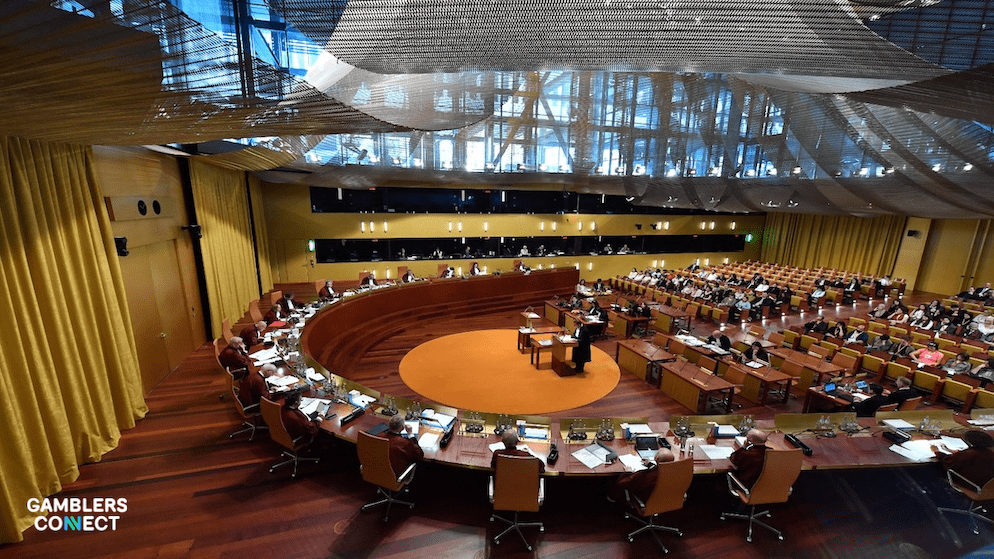
Source: Curia Europa (CJEU)
The Court of Justice of the European Union (CJEU) has issued a preliminary determination that could fundamentally reshape how cross-border gambling disputes are handled in Europe.
In a long-standing case between an Austrian player and the Maltese operator Titanium Brace Ltd, the CJEU ruled that the consumer protection laws of the player’s home country take precedence over the operator’s licensing jurisdiction.
The dispute began in 2022 when an Austrian player sued to recover losses from the Malta-licensed operator, arguing that the company was not authorized to offer services in Austria. Titanium Brace Ltd contended that it was fully compliant with Maltese law and therefore not liable.
Applicability of Local Law
Citing the EU’s Rome II Regulation, the Court interpreted that for non-contractual obligations, the applicable law is that of the country where the damage occurs.
“The damage arises where the player resides, as that is where the financial loss and consumer protection interests manifest,” the Court stated. “In games of chance organised in another Member State without the necessary national licence, the law applicable to that damage is, in principle, that of the Member State in which that person has their habitual residence.”
Implications for Malta
This ruling challenges the “freedom to provide services” defense often used by Malta-licensed operators. It also seemingly conflicts with Malta’s “Bill 55,” a 2023 amendment designed to shield licensees from foreign judgments. If this preliminary interpretation is applied by Austrian courts, it could establish a precedent allowing players across the EU to sue foreign operators under their own domestic consumer protection laws.
While the ruling is currently a preliminary interpretation to guide arbitration, legal experts view it as a turning point that reinforces member state autonomy over gambling regulation.