
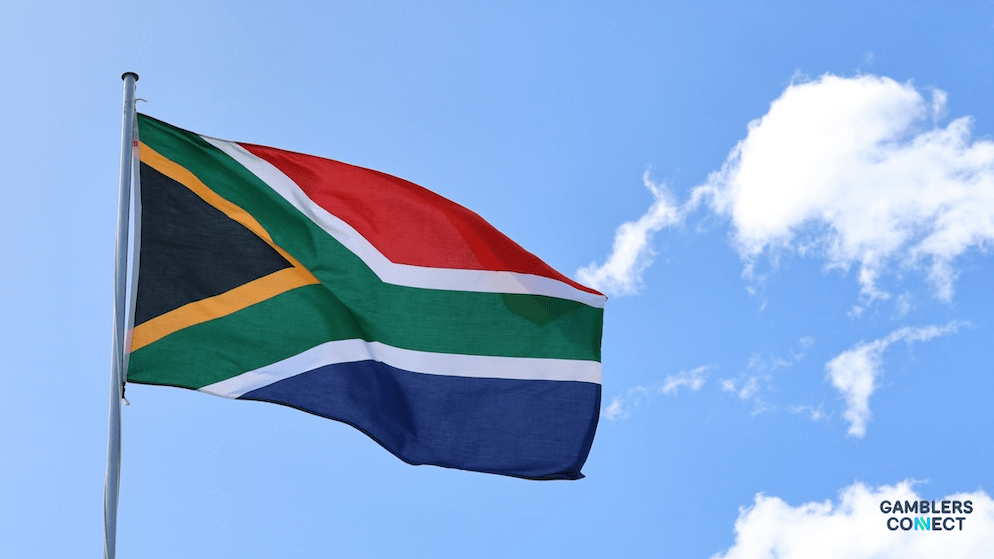
South Africa National Gambling Tax Proposal Faces Constitutional Challenge

by Dimitri Dimitrov Published on January 14, 2026
Editorial Standards

☆ Editorial Standards

All news content is produced by qualified journalists and analysts under a published editorial code requiring accuracy, source verification, and editorial review prior to publication.

Advertisers and commercial partners have no influence over news coverage.


News editorial policy · Contact us
✓ Fact-Checked

✓ Fact-Checked

Every article undergoes senior editorial review.

Regulatory and legal reporting is cross-referenced against primary sources including official government and regulatory authority records.

Corrections are issued transparently with a visible update notice.


News fact-check policy
⊘ Independence

⊘ Independence

Gamblers Connect is a B2B iGaming media platform.

Editorial decisions, including what to cover, how to cover it, and what to publish, are made independently by our newsroom.

Commercial partners may purchase publication frequency but cannot influence editorial tone, angle, or content.


News independence policy
↗ Commercial Disclosure

↗ Commercial Disclosure

Gamblers Connect is a B2B media platform. We generate revenue through subscriptions, B2B referral partnerships, directory listings, advertising, and media services.

Gamblers Connect is not a licensed gambling operator, affiliate, or player acquisition channel in any jurisdiction.

We do not earn revenue from player activity, wagers, or deposits.


News commercial disclosure · Contact us
South Africa 20% Gambling Tax Proposal Faces Criticism

A legislative proposal to impose a 20 percent national levy on gross online gambling revenue in South Africa has drawn sharp criticism from industry stakeholders and legal experts.

Opponents argue that the measure conflicts with the constitution and could have detrimental effects on the regulated market.

Arguments Against Centralization

The Free Market Foundation described the measure as a naked revenue grab that threatens the existence of the legal gambling market. Experts warn that placing excessive financial pressure on licensed operators could push players toward the unlicensed and illegal market which offers fewer consumer protections.

Ayanda Zulu, a political studies graduate from the University of Pretoria in South Africa and intern at the Free Market Foundation, published an article calling the plan a bizarre proposal that should not proceed. He pointed to the National Gambling Act which delegates primary regulatory authority to the provinces rather than the national government.

“This means that a national tax is unconstitutional because its centralisation of fiscal responsibility ignores clear jurisdictional boundaries and the limits placed on the national government,” Zulu argued.

Treasury Justification and Revenue Targets

The National Treasury draft paper proposes layering the 20 percent national levy on top of existing provincial taxes which range between 5 percent and 7 percent. The department justifies the higher rate by noting that land based casinos contribute jobs and infrastructure while online gambling offers fewer tangible economic benefits.

The Treasury estimates that at current levels the tax would generate over 10 billion rand in additional revenue. However, the department insists the primary objective is to discourage problem gambling rather than simply raising funds. The levy would apply to gross gambling revenue which covers turnover minus winnings paid to players.


Dimitri Dimitrov

Dimitri is an iGaming expert with nearly a decade of experience and a knack for crafting content that speaks directly to the iGaming crowd. He understands affiliate marketing, player psychology, and search algorithms, which enables him to write engaging, data-driven articles.

Sources
Source documentation not yet available for this article
Our editorial team is in the process of verifying and documenting sources for this content.
Mentioned in this Article