
Nepal’s iGaming Market Collapses 74% Amid Political Unrest

by Dimitri Dimitrov Published on September 22, 2025
Editorial Standards

☆ Editorial Standards

All news content is produced by qualified journalists and analysts under a published editorial code requiring accuracy, source verification, and editorial review prior to publication.

Advertisers and commercial partners have no influence over news coverage.


News editorial policy · Contact us
✓ Fact-Checked

✓ Fact-Checked

Every article undergoes senior editorial review.

Regulatory and legal reporting is cross-referenced against primary sources including official government and regulatory authority records.

Corrections are issued transparently with a visible update notice.


News fact-check policy
⊘ Independence

⊘ Independence

Gamblers Connect is a B2B iGaming media platform.

Editorial decisions, including what to cover, how to cover it, and what to publish, are made independently by our newsroom.

Commercial partners may purchase publication frequency but cannot influence editorial tone, angle, or content.


News independence policy
↗ Commercial Disclosure

↗ Commercial Disclosure

Gamblers Connect is a B2B media platform. We generate revenue through subscriptions, B2B referral partnerships, directory listings, advertising, and media services.

Gamblers Connect is not a licensed gambling operator, affiliate, or player acquisition channel in any jurisdiction.

We do not earn revenue from player activity, wagers, or deposits.


News commercial disclosure · Contact us
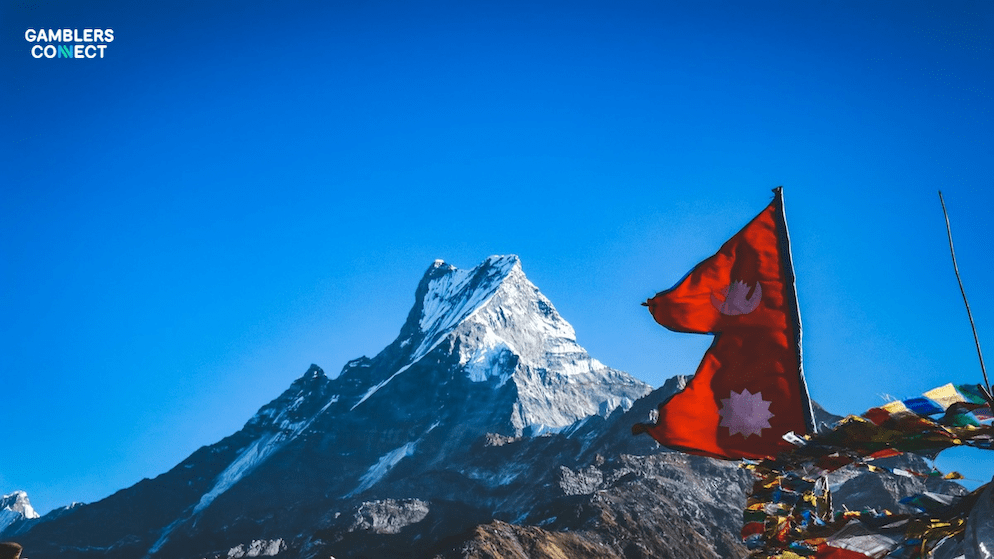
The flag of Nepal and traditional prayer flags with a Himalayan mountain in the background, representing the nation at the center of a crisis in its iGaming market.

Nepal’s burgeoning iGaming industry has suffered a catastrophic setback, with market interest plummeting by 74% in a single week in early September.

According to data from market intelligence provider Blask, the dramatic downturn is a direct result of a government-ordered social media ban that triggered widespread political upheaval and violent protests across the nation.

The Blask Index, which measures user activity at the top of the acquisition funnel, fell from 26,300 on September 2 to just 6,600 by September 9, marking the sharpest decline since the market began being tracked.

This collapse brought a year of powerful growth to an abrupt halt, which had previously seen the Nepal Blask Index climb 72%.

The crisis was ignited on September 4 when the government blocked access to 26 major social media platforms, including Facebook, Instagram, X, and YouTube.

The move left only a few apps like TikTok accessible after mandatory registration with the government.

The digital restrictions prompted immediate and widespread demonstrations, led mainly by young people in major cities such as Kathmandu and Pokhara. Protesters voiced their anger through powerful slogans.

“Shut down corruption and not social media” and “Youths against corruption.”

The protests soon escalated, leading to violent clashes with security forces that resulted in at least 19 deaths and over 100 injuries.

Authorities responded by imposing curfews and internet blackouts, while fires at data centers further disrupted connectivity.

The loss of social media cut off a vital marketing and user acquisition channel for the 48 iGaming brands active in the market.

Although the ban was lifted on September 9, ongoing curfews and transport blockades have crippled recovery.

The crisis highlights the extreme vulnerability of Nepal’s once fast-growing iGaming industry to political instability and unpredictable regulatory shifts.

Dimitri Dimitrov

Dimitri is an iGaming expert with nearly a decade of experience and a knack for crafting content that speaks directly to the iGaming crowd. He understands affiliate marketing, player psychology, and search algorithms, which enables him to write engaging, data-driven articles.

Sources
Source documentation not yet available for this article
Our editorial team is in the process of verifying and documenting sources for this content.
Mentioned in this Article