Consolidation Looms for Philippine Online Gaming as PAGCOR Tightens Rules

by Dimitri Dimitrov Published on January 21, 2026
Editorial Standards

☆ Editorial Standards

All news content is produced by qualified journalists and analysts under a published editorial code requiring accuracy, source verification, and editorial review prior to publication.

Advertisers and commercial partners have no influence over news coverage.


News editorial policy · Contact us
✓ Fact-Checked

✓ Fact-Checked

Every article undergoes senior editorial review.

Regulatory and legal reporting is cross-referenced against primary sources including official government and regulatory authority records.

Corrections are issued transparently with a visible update notice.


News fact-check policy
⊘ Independence

⊘ Independence

Gamblers Connect is a B2B iGaming media platform.

Editorial decisions, including what to cover, how to cover it, and what to publish, are made independently by our newsroom.

Commercial partners may purchase publication frequency but cannot influence editorial tone, angle, or content.


News independence policy
↗ Commercial Disclosure

↗ Commercial Disclosure

Gamblers Connect is a B2B media platform. We generate revenue through subscriptions, B2B referral partnerships, directory listings, advertising, and media services.

Gamblers Connect is not a licensed gambling operator, affiliate, or player acquisition channel in any jurisdiction.

We do not earn revenue from player activity, wagers, or deposits.


News commercial disclosure · Contact us
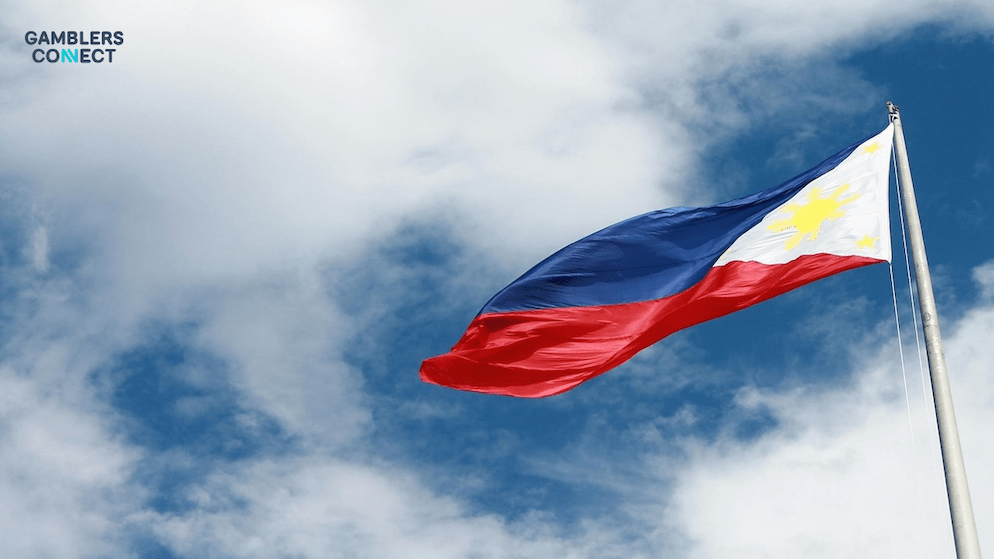
The flag of the Philippines flying on a flagpole, symbolizing the stricter oversight and higher revenue targets set for licensed operators.

The Philippine online gaming landscape is bracing for a massive shake-up in 2026 following strict new mandates from the Philippine Amusement and Gaming Corp (PAGCOR). Under a December 2025 memorandum, licensed operators in the Philippines must now generate at least P30 billion in monthly gross gaming revenue (GGR) and pay a fixed P9 billion monthly guarantee fee.

These high financial hurdles are expected to force widespread consolidation. Experts predict the number of active platforms could plummet from the current 33 to just 15 by April. Tony Manguiat, president of HHR Philippines, noted the severity of the situation for smaller players.

“When current gross gaming revenues from various platforms are added up and measured against the new requirements, more than half, or possibly as much as three-fourths, do not reach the level needed to operate independently,” Manguiat explained.

Partnerships with Land-Based Casinos 

To survive, many service providers are seeking mergers or partnerships with established land-based casinos to pool revenues and meet Philippines GGR threshold. In addition to the guarantee fee, operators must remit roughly 30 percent of their GGR to the regulator, further squeezing margins. HHR Philippines has already established a CSR arm, Buenas Cares, to manage the social development portion of these remittances.

A Stabilized, Regulated Future 

While the immediate effect will be a “quieter” market in the first half of 2026 as companies adjust, Manguiat views the regulations as a necessary step toward stability. The new rules aim to integrate unregulated activities into the formal system, leaving fewer but stronger operators better equipped to handle long-term compliance. By mid-year, the sector is expected to emerge leaner, with larger entities dominating a more strictly regulated market.


Dimitri Dimitrov

Dimitri is an iGaming expert with nearly a decade of experience and a knack for crafting content that speaks directly to the iGaming crowd. He understands affiliate marketing, player psychology, and search algorithms, which enables him to write engaging, data-driven articles.

Sources
Source documentation not yet available for this article
Our editorial team is in the process of verifying and documenting sources for this content.
Mentioned in this Article