
Dutch Regulator Enforces Ban on Role Models with €400,000 Fine for JOI Gaming

by Dimitri Dimitrov Published on December 16, 2025
Editorial Standards

☆ Editorial Standards

All news content is produced by qualified journalists and analysts under a published editorial code requiring accuracy, source verification, and editorial review prior to publication.

Advertisers and commercial partners have no influence over news coverage.


News editorial policy · Contact us
✓ Fact-Checked

✓ Fact-Checked

Every article undergoes senior editorial review.

Regulatory and legal reporting is cross-referenced against primary sources including official government and regulatory authority records.

Corrections are issued transparently with a visible update notice.


News fact-check policy
⊘ Independence

⊘ Independence

Gamblers Connect is a B2B iGaming media platform.

Editorial decisions, including what to cover, how to cover it, and what to publish, are made independently by our newsroom.

Commercial partners may purchase publication frequency but cannot influence editorial tone, angle, or content.


News independence policy
↗ Commercial Disclosure

↗ Commercial Disclosure

Gamblers Connect is a B2B media platform. We generate revenue through subscriptions, B2B referral partnerships, directory listings, advertising, and media services.

Gamblers Connect is not a licensed gambling operator, affiliate, or player acquisition channel in any jurisdiction.

We do not earn revenue from player activity, wagers, or deposits.


News commercial disclosure · Contact us
A blurred editorial image of the Jack's Racing Day event, showing the operator's branding on banners and racing equipment.

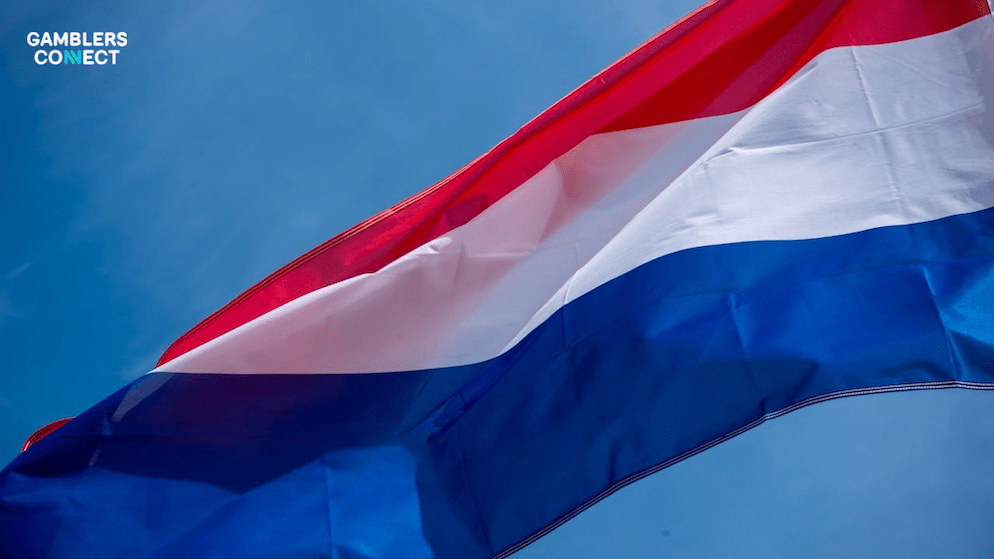
The Kansspelautoriteit (KSA), the Netherlands’ gambling regulator, has publicly announced a fine of €400,000 imposed on JOI Gaming, the operator of the Jack’s Casino brand.

The penalty concludes an investigation into promotional activities at the 2023 Jack’s Racing Day event, where the company was found to have violated strict regulations concerning the use of role models in gambling advertising.

Investigators discovered that JOI Gaming had utilized prominent figures to promote the event in ways that impermissibly linked their public image to the gambling brand. These individuals were observed signing caps featuring the operator’s logo and posing for photographs alongside hostesses in branded clothing. These images were subsequently posted on the event’s website and social media channels.

Although JOI Gaming complied with an order to remove the posts, the KSA determined that the initial breach warranted a significant financial penalty.

The delay in publishing the fine was due to a preliminary injunction JOI Gaming had partially secured, preventing earlier public disclosure. The ruling underscores the KSA’s rigorous stance on protecting vulnerable groups. “To protect vulnerable groups such as young people, strict rules apply to the use of role models in gambling advertising,” the KSA stated in its announcement, defining role models broadly to include “celebrities, (former) professional footballers or influencers.”

The regulator’s concern is that such figures “can serve as role models of success, behaviour or an ideal lifestyle for impressionable young adults.” Consequently, while they may be used under strict conditions for lower-risk activities like lotteries, “the use of role models is prohibited for high-risk gambling, such as online gambling.”

This enforcement action serves as a clear warning to the industry that the KSA remains committed to maintaining a safe advertising environment and preventing the normalization of high-risk gambling behaviors among young audiences.

Dimitri Dimitrov

Dimitri is an iGaming expert with nearly a decade of experience and a knack for crafting content that speaks directly to the iGaming crowd. He understands affiliate marketing, player psychology, and search algorithms, which enables him to write engaging, data-driven articles.

Sources
Source documentation not yet available for this article
Our editorial team is in the process of verifying and documenting sources for this content.
Mentioned in this Article