EU Member States Divided Over Proposed Online Gambling Tax to Finance Budget

by Dimitri Dimitrov Published on August 7, 2026
Editorial Standards

☆ Editorial Standards

All news content is produced by qualified journalists and analysts under a published editorial code requiring accuracy, source verification, and editorial review prior to publication.

Advertisers and commercial partners have no influence over news coverage.


News editorial policy · Contact us
✓ Fact-Checked

✓ Fact-Checked

Every article undergoes senior editorial review.

Regulatory and legal reporting is cross-referenced against primary sources including official government and regulatory authority records.

Corrections are issued transparently with a visible update notice.


News fact-check policy
⊘ Independence

⊘ Independence

Gamblers Connect is a B2B iGaming media platform.

Editorial decisions, including what to cover, how to cover it, and what to publish, are made independently by our newsroom.

Commercial partners may purchase publication frequency but cannot influence editorial tone, angle, or content.


News independence policy
↗ Commercial Disclosure

↗ Commercial Disclosure

Gamblers Connect is a B2B media platform. We generate revenue through subscriptions, B2B referral partnerships, directory listings, advertising, and media services.

Gamblers Connect is not a licensed gambling operator, affiliate, or player acquisition channel in any jurisdiction.

We do not earn revenue from player activity, wagers, or deposits.


News commercial disclosure · Contact us
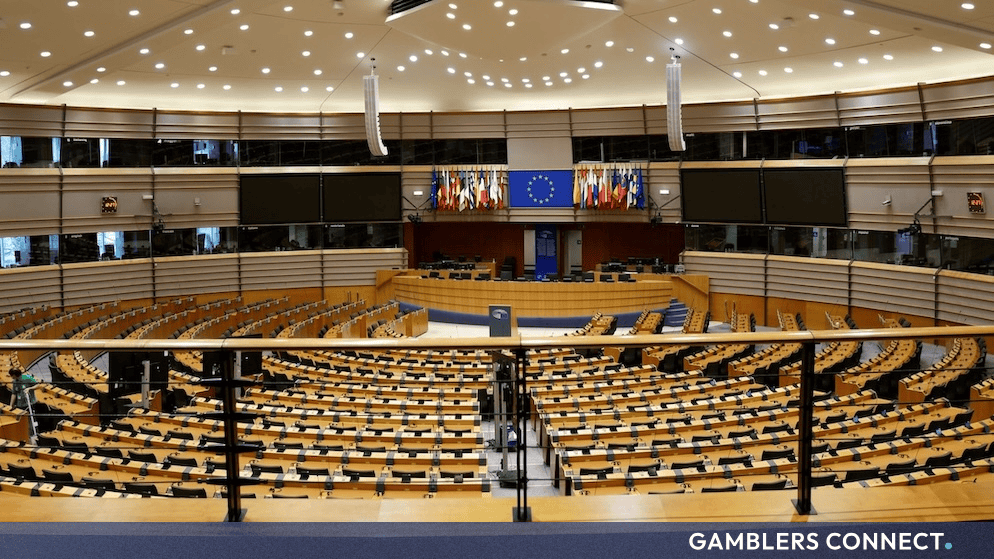
Interior view of the empty European Parliament hemicycle chamber with rows of desks and the European Union flag displayed at the front.
Key Takeaways
⏱ 3 min read
1
Proposed Levy & Revenue — The potential new tax aims to support the next EU budget, with European Commission estimates suggesting a 3% tax on online gaming net turnover could yield about €1.9 billion annually and over €13 billion across the budget cycle
2
Political Divisions — Southern European nations have lined up against Western states like France, with Malta, Italy, Portugal, and Spain expressing serious doubts or formal opposition
3
Economic Concerns: — Malta highlights that gaming accounts for roughly 12% of its GDP, warning that the tax would penalize regulated operators, boost the black market, and drive companies outside the EU. Prime Minister Robert Abela stated that Malta will not accept EU-wide taxes for bloc spending
4
Unanimity Requirement — The measure requires unanimous approval from all 27 member states, a target that remains distant as Ireland seeks a comprehensive agreement by the end of the year

Divisions Emerge Across Member States Before Formal Proposal

A proposal to introduce a European tax on online gambling to help finance the next European Union budget has sparked intense debate and divided member states, even before the European Commission has presented a formal legislative measure. The potential new levy forms part of the Union’s new own resources intended to support the upcoming EU budget cycle. This initiative has pitted Southern European countries, where the gaming sector holds significant economic weight, against Western European states, led by France, which are more in favor of introducing the tax.

National capitals are currently discussing a measure that would require unanimous approval by all member states and has yet to be formally presented by the European Commission. The issue forms part of broader negotiations surrounding the next EU budget, with Ireland, holding the current presidency of the European Council, committed to promoting a comprehensive agreement by the end of the year.

Economic Projections and Conflicting Arguments

Supporters of the tax point out that the new levy could generate over €13 billion during the next budget cycle and help address the risks associated with gambling addiction. According to European Commission estimates, a 3% tax on the net turnover of the online gaming sector would generate approximately €1.9 billion annually.

However, the proposal has encountered fierce opposition from Malta, where the gaming sector is a strategic pillar representing approximately 12% of the national GDP. The Maltese government warns that increased taxation risks penalizing regulated operators, encouraging the illegal market, and pushing companies to relocate operations outside the European Union. Maltese Prime Minister Robert Abela reiterated Valletta’s firm stance, declaring that “Malta will not accept the introduction of EU-wide taxes designed to support the bloc’s spending”.

Malta has joined forces with other Mediterranean nations, including Italy, Portugal, and Spain, in opposing the proposal put forward by Socialist MEP Victor Negrescu, according to diplomatic sources cited by Politico. Italy’s reservations are particularly notable because, under European Commission estimates, Italy’s contribution would represent roughly 7% of the total tax revenue, a lower share than that of other major member states.

Perspectives from Advocates and Academia

Outside of political circles, opinions remain mixed. Former England goalkeeper Peter Shilton, who is actively involved in the fight against gambling addiction, supports the introduction of the tax. He argues that higher taxation would help reduce operators’ advertising investments and, consequently, consumers’ exposure to gambling.

Meanwhile, a more moderate view comes from the academic world. Economist Nicola Matteucci of the Polytechnic University of Marche observes that there is “a point at which prices exceed a certain level and demand decreases,” but clarifies that the phenomenon “is not as immediate a process as the industry suggests”. For the tax to ultimately come into force, unanimous approval from all 27 member states will be required, a threshold that, given current diplomatic divides, still appears distant.


Dimitri Dimitrov

Dimitri is an iGaming expert with nearly a decade of experience and a knack for crafting content that speaks directly to the iGaming crowd. He understands affiliate marketing, player psychology, and search algorithms, which enables him to write engaging, data-driven articles.

Sources
1 source verified before publication. This news is an official press release that traces directly to official documents by AgiproNews. How we verify sources →
Gamblers Connect only publishes verified and official news from reputable media outlets. Read our full editorial standards →
Mentioned in this Article