Within the competitive landscapes of iGaming and cryptocurrency, acquiring backlinks often involves navigating pitches promising premium metrics, high domain ratings, and impressive traffic reports.
However, relying on vanity metrics carries severe risks, particularly as search engines and artificial intelligence models refine how they evaluate authority and references. Securing sustainable visibility requires understanding why link spam is more costly now than ever before, identifying deceptive practices, and applying robust publisher vetting protocols.
Why link spam carries higher stakes
Operating in digital publishing today means contending with stricter algorithmic rules and shifting ranking environments. Several critical factors explain why acquiring low-quality links creates greater exposure:
- Algorithmic scheduling means Google handles link spam through separate dedicated systems operating on independent timelines rather than waiting for major core updates.
- Discounted links remain discounted, as official documentation notes that subsequent updates rarely restore value to links identified as spam.
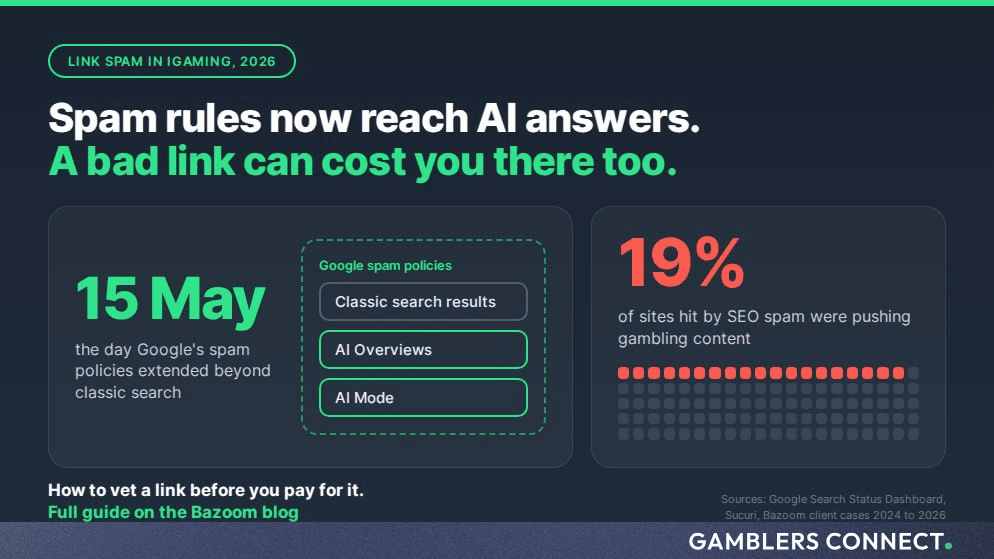
- Artificial intelligence integration brings modern visibility mechanisms into scope, with Google policies explicitly covering AI Overviews and AI Mode regarding link spam and inauthentic brand mentions.
- Organic authority directly feeds AI visibility, as research demonstrates that the vast majority of ChatGPT citations already rank strongly in traditional search results, meaning the loss of traditional authority hurts both channels.
Categorizing the nine types of link spam
Every week, iGaming and crypto brands receive pitches promoting various link acquisition tactics, many of which carry hidden penalties or zero long-term value. According to Bazoom, recognizing these categories protects marketing budgets:
- PBN posts originate from expired domains rebuilt as blogs solely for selling links, identifiable by historical content mismatches in the Wayback Machine and outbound links pointing to unrelated commercial sites.
- Inflated premium sites rely on pumped domain ratings using cheap links and bot-driven traffic anomalies where monthly visits fail to align with ranking keywords.
- Parasite sections involve renting subfolders on established news or authority domains for casino or crypto content, a practice targeted by Google’s site reputation abuse policies.
- Hacked site injections place hidden links inside old, unpatched content management systems where anchor languages or editorial contexts do not match the host page.
- Bulk niche edits drop commercial links into old, unrelated articles long after their initial publication date, clustering multiple brand insertions on a single page.
- Automated packages generate thousands of low-quality profile, comment, and wiki links via automated software platforms, characterized by referring domains with low user ratings.
- Expired domain redirects utilize 301 redirects from old websites in entirely different niches, a tactic explicitly classified as spam.
- Negative SEO attacks flood a target domain with thousands of toxic links featuring spam anchors or adult terms within a short window.
- Paid AI bait listicles seed brand names into near-identical comparison lists published across multiple unlabelled sites during the same week.
The five minute publisher check
Relying solely on domain ratings can be misleading when evaluating prospective publishing partners. Implementing a structured review using analytical tools helps filter out substandard sites before committing funds:
- Examine traffic per keyword by dividing organic traffic by organic keywords to spot unrealistic traffic anomalies.
- Compare domain rating history against organic traffic over a twelve month period to ensure authority and traffic growth move in tandem.
- Monitor referring domain velocity to identify unnatural monthly spikes lacking promotional campaigns or PR events.
- Review outbound linking patterns to ensure the site links to reputable sources rather than heavy concentrations of commercial gambling or loan anchors.
- Analyze topic spread across top pages to confirm consistent thematic relevance rather than erratic multi-industry publishing.
- Verify traffic geography to ensure visitor locations match the target language and intended market.
- Inspect the anchor text cloud for natural brand mentions rather than excessive commercial keywords or foreign-language spam.
Additional manual checks, such as reviewing historical archives via the Wayback Machine and reading a recent article to ensure genuine editorial oversight, provide vital context before establishing partnerships. Ultimately, strict topical relevance outweighs broad general authority, ensuring both traditional search engines and artificial intelligence models recognize genuine industry expertise.