Oskar Bilstad Wins PokerStars Open Málaga Record-Setting Turnout
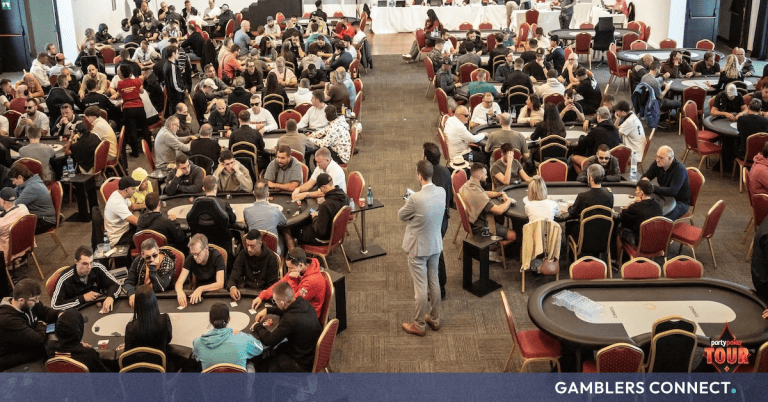
The PokerStars Open Málaga festival has concluded its flagship tournament at the Casino Gran Madrid, Torrequebrada, rewriting the regional record books. The €1,100 Main Event attracted a record-breaking field of 1,753 entries, generating a massive total prize pool of €1,100.
Following a strategic three-way deal at the final table, Norway’s Oskar Bilstad officially claimed the championship trophy and a career-best payout of €178,840. The 27-year-old outlasted a highly competitive field to secure the landmark victory on the Spanish coast.
Final Table Action and Financial Adjustments
The final day of play began with 16 contenders returning to the felt, all eyeing the original un-chopped top prize of €258,080. Once play reached the final three participants, Bilstad, Daniel Heredi, and Jose Valls, the players paused the clock to negotiate an independent payout agreement. They agreed to lock up flattened financial amounts based on their chip ICM counts while keeping an additional €18,000 and the official title up for grabs.
Through these negotiations, third-place finisher Jose Valls of Andorra walked away with the largest overall financial payout, banking €180,160. Runner-up Daniel Heredi from Hungary officially secured a second-place cash of €175,980, while Bilstad locked down the victory and the remaining cash reserve.
PokerStars Open Málaga Main Event Results
- 1. Oskar Bilstad (Norway): €178,840*
- 2. Daniel Heredi (Hungary): €175,980*
- 3. Jose Valls (Andorra): €180,160*
- 4. Francisco De Paula (Spain): €88,700
- 5. Min-guk Kim (South Korea): €68,300
- 6. Herve Gouzil (France): €52,500
- 7. Francesco Caramazza (Italy): €40,400
- 8. Stefano Rege Gianas (Italy): €31,100
- 9. Antonio Ruiz Tellado (Spain): €23,900 (An asterisk indicates a final table deal was finalized)
Side Event Highlights and Festival Recap
The multi-day PokerStars festival kicked off with strong engagement across its preliminary schedule. Early momentum built during the opening €220 Bounty event, where Nicholas Ralph from the United Kingdom defeated a field of 281 entries to claim €5,362 plus accumulated bounties. Simultaneously, the €220 Deep Stack event ended in a three-way chop, with Norway’s Thomas Jakobsen taking the trophy and €8,707, followed closely by Romania’s Andrei-Eduard Pirvulescu (€8,695) and Manuel Romero (€8,700).
The high-stakes action intensified with the launch of the €2,200 High Roller, which generated over 300 entries by Day 2. The field featured notable poker figures, including last year’s Main Event champion Manuel Ferrari, French pro Arthur Conan, author Dara O’Kearney, and EPT runner-up Andrew Hulme. Ultimately, Italy’s Elia Salerno secured the tournament victory, claiming the €119,420 top prize after a heads-up battle against fellow countryman Luca Bernardi. Additional side event trophies were claimed by Line Lindsholm in the Women’s Event and Iker González in the PLO division.
Technical Analysis: Evaluating ICM Deal Mathematics and Variance Reduction in Open Field Tournaments
From a game theory and professional sports analytics perspective, executing a three-way chop at a major live poker final table highlights the mathematical importance of the Independent Chip Model (ICM). In large-field tournaments, the steep pay jumps between third, second, and first place introduce significant financial variance. This variance can often distort optimal, unexploitable play.
By applying ICM calculations, players convert their physical chip stacks into real equity values based on the probability of finishing in each remaining position.
This structural recalculation explains why third-place finisher Jose Valls walked away with the largest cash payout (€180,160) despite not winning the trophy. At the exact moment the deal was struck, Valls held the chip lead, securing the highest mathematical share of the remaining prize pool.
Leaving a portion of the prize pool (€18,000) to play for satisfies both regulatory transparency guidelines and competitive drive. It rewards the eventual winner while significantly lowering the short-term variance for the final table participants. For major operators like PokerStars, facilitating these seamless backend calculations ensures player satisfaction and helps maintain healthy field sizes across their global live tours.