


Shufti, a global identity verification and fraud prevention solution, has published its iGaming Fraud Trends report, an analysis of Shufti first half 2026 verification data in the igaming sector across 50 countries. The report examines the identity connections behind bonus abuse, multi accounting, and jurisdiction circumvention in the igaming industry. When registrations are checked in isolation, these connections remain hidden, exposing operators to networked fraud and organised crime.
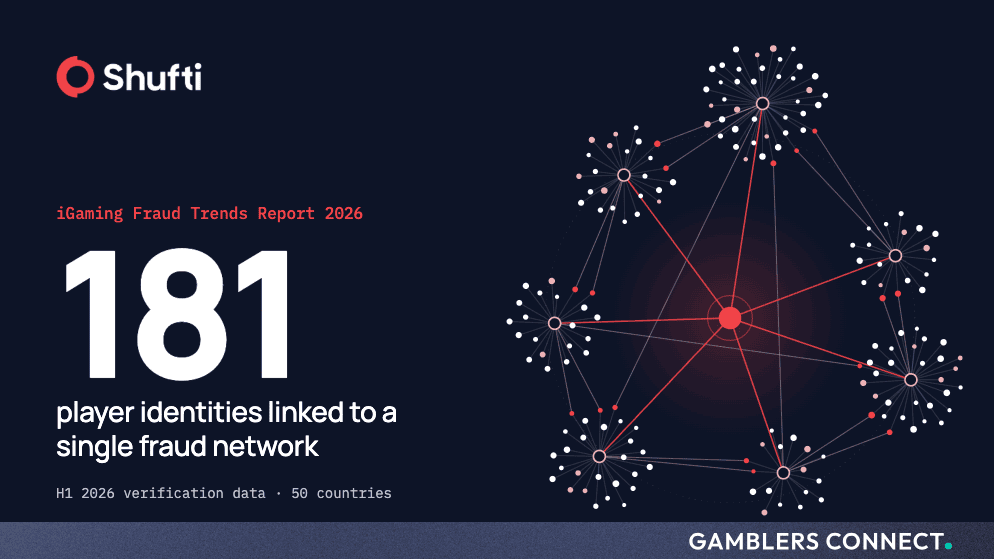
The report identified the largest single fraud network in the dataset as being linked to 181 player identities, connected through shared devices, shared documents, and other corroborating signals rather than device reuse alone. Across the full population assessed, 16.05% of cases carried multiple corroborated fraud signals at the point of registration, while 28.79% of cases involved identities already linked to a prior history of fraud.
Shared device connectivity was present in 38.07% of fraud cases eligible for device fingerprinting, and a duplicate identity rate of 2.85% was recorded across cases eligible for biometric proof of life matching. The report highlights that device intelligence identifies connections between accounts, while identity deduplication identifies repeated use of the same identity, providing complementary views of connected account activity that are strongest when read together.
Frayyam Asif, Chief Technology Officer at Shufti:
“Effective fraud detection is not about reacting to every anomaly. A shared device or repeated identity alone does not prove fraud. It’s when multiple signals point to the same pattern that operators can identify coordinated abuse with greater confidence. This helps protect genuine players from unnecessary friction while addressing higher risk activity.”
Shufti first half 2026 igaming fraud data shows potential bonus abuse was associated with 13.77% of cases, defined as repeated or coordinated sign ups used to claim promotional incentives intended for eligible players. The report estimates that more than $30 million in potential bonus abuse exposure was prevented across the detected population.
Jurisdiction circumvention accounted for 22.73% of cases originating from VPN or proxy infrastructure. Major US states with a live regulated online casino market require operators to confirm a player is physically inside state lines for every session. The report notes the same tools used to bypass geofencing can evade age checks, and that UK gambling trade reporting has linked Online Safety Act age assurance duties to a rise in VPN use.
Shufti Identity Network Intelligence helps operators identify connections between accounts, devices and verification attempts, rather than assessing each registration in isolation. This gives operators a broader view of linked activity and potential fraud networks.
The report also provides a twelve point readiness assessment operators can use to score their current controls, covering shared device detection, previous fraud linkage, VPN and proxy detection, jurisdiction specific workflows, and the point at which promotional value is released. The findings show how individual risk signals can connect to reveal broader patterns of coordinated fraud across igaming platforms.
Read the full Shufti iGaming Fraud Report 2026 to learn more about fraud patterns and prevention in the igaming sector:
https://shuftipro.com/resources/whitepapers-reports/igaming-fraud-report/
About Shufti
Shufti is a global identity verification and full compliance lifecycle platform that combines document verification, biometric authentication, liveness, and deepfake detection with fraud ring detection and identity network intelligence inside one risk based decisioning framework. For igaming operators, its fraud prevention capabilities help detect account takeover and multi accounting through device and behavioural fingerprinting, while geolocation compliance helps verify player location and identify attempts to bypass jurisdictional restrictions.