

Himanshu Gulati, a senior political figure representing Norway’s influential Progress Party (Fremskrittspartiet – FrP), has signaled a decisive shift in the country’s gambling policy landscape.
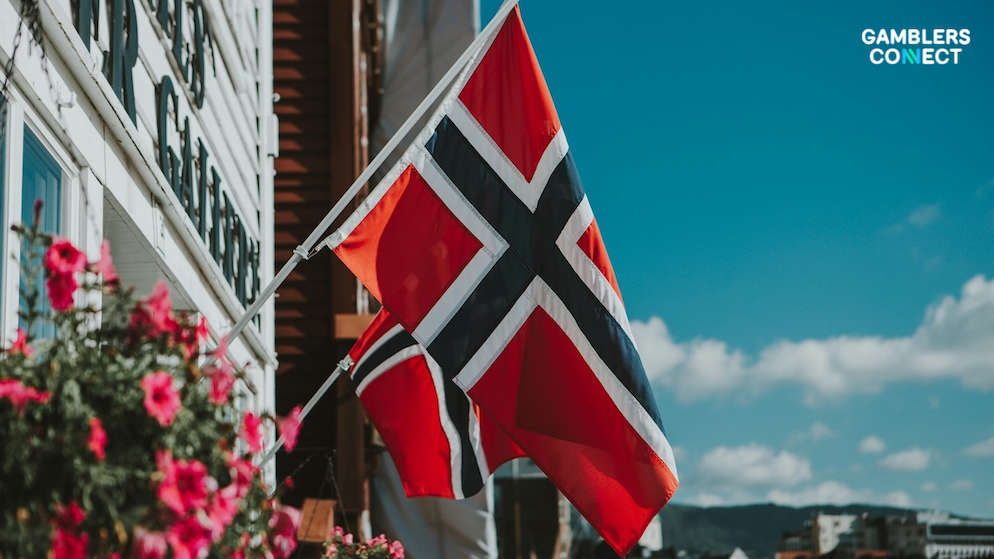
Delivering a major keynote address at the sector’s annual Spillkonferansen gambling conference this week, Gulati predicted that Norway’s long-standing state gambling monopoly will be systematically dismantled following the next change in government leadership.
Prioritizing Pragmatic Licensing System Reforms
Gulati, a regular participant at the conference, declared that transitioning the state away from a monopoly to an open licensing system would operate as the Progress Party’s foremost cultural policy priority upon returning to power. The party has long advocated for a reformed licensing framework, having first called for an end to the current Norsk Tipping monopoly model in 2021.
During previous sessions, Progress Party MP Silje Hjemdal supported the reform by pointing out that the current setup allows massive capital sums to leak out of the country annually via offshore platforms without returning any funding to Norwegian sports or cultural groups.
The political position carries substantial weight, as the Progress Party currently sits behind only the Labour Party in terms of total parliamentary seats following the September 2025 general election, where the party made reasonable gains to secure 48 seats and 24% of the popular vote. Gulati framed the deregulation blueprint as a principle of absolute pragmatism, drawing direct parallels to previous deregulatory successes spearheaded by his party:
“I have for many years said internally in my party that when there is a change of government, the licence model in the gambling field must be the most important cultural political issue for the Progress Party. Some of the current rules and restrictions are, in my opinion, contrary to all common sense.”
Low Channelisation Metrics and System Vulnerabilities
The politician called for a knowledge-driven re-examination of the monopoly’s actual effectiveness, criticizing historical debates that have been overshadowed by unverified assumptions regarding social harms and revenue distribution.
Gulati emphasized that Norway’s monopoly framework stands increasingly isolated across Europe, pointing out that neighboring markets like Finland have already abandoned state monopolies to launch liberalized iGaming markets in 2027, drawing 50 initial operator applications.
Furthermore, he highlighted that the current model fails to achieve competitive consumer channelisation, leaving the market highly exposed to offshore networks, while recent technical errors and Eurojackpot system vulnerabilities at Norsk Tipping have drawn financial penalties from regulators.
Gulati concluded by stating that regardless of political ideology, a coordinated framework is required to handle problem gambling and match-fixing corruption:
“Regardless of where one stands politically on gambling policy, even if one wants total prohibition, we must agree that the work to combat problematic gambling behaviour must be coordinated and consistent.”