

Gamban Advocates for “Layered Exclusion” as Brazil Becomes Hub for Gambling Addiction Strategy

by Dimitri Dimitrov Published on April 20, 2026
Editorial Standards

☆ Editorial Standards

All news content is produced by qualified journalists and analysts under a published editorial code requiring accuracy, source verification, and editorial review prior to publication.

Advertisers and commercial partners have no influence over news coverage.


News editorial policy · Contact us
✓ Fact-Checked

✓ Fact-Checked

Every article undergoes senior editorial review.

Regulatory and legal reporting is cross-referenced against primary sources including official government and regulatory authority records.

Corrections are issued transparently with a visible update notice.


News fact-check policy
⊘ Independence

⊘ Independence

Gamblers Connect is a B2B iGaming media platform.

Editorial decisions, including what to cover, how to cover it, and what to publish, are made independently by our newsroom.

Commercial partners may purchase publication frequency but cannot influence editorial tone, angle, or content.


News independence policy
↗ Commercial Disclosure

↗ Commercial Disclosure

Gamblers Connect is a B2B media platform. We generate revenue through subscriptions, B2B referral partnerships, directory listings, advertising, and media services.

Gamblers Connect is not a licensed gambling operator, affiliate, or player acquisition channel in any jurisdiction.

We do not earn revenue from player activity, wagers, or deposits.


News commercial disclosure · Contact us
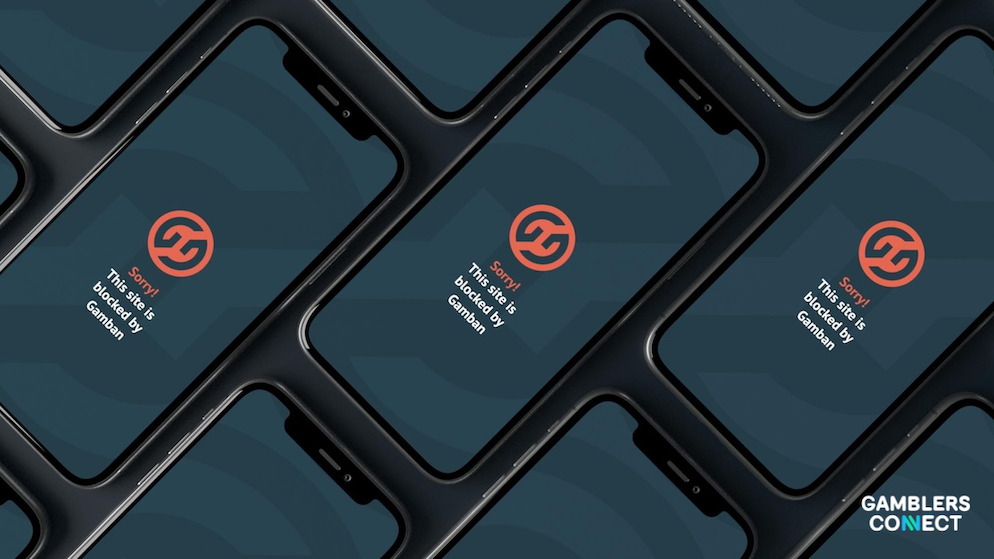
Gamban is promoting device-level blocking as a critical component of its "layered exclusion" strategy in the booming Brazilian market.

As Brazil transitions into one of the world’s largest regulated gambling jurisdictions, Gamban is pioneering a new methodology known as “layered exclusion.”

This approach is designed to provide a more effective safety net for players in markets where illegal offshore platforms still account for nearly 50% of all activity.

Device-Level Blocking vs. National Systems

The core of Gamban’s strategy is the implementation of a blocking application at the device level. Unlike national self-exclusion registers, which only restrict access to licensed operators, Gamban’s technology is capable of blocking any gambling-related resource, regardless of its legal status. One subscription can cover up to 15 devices and includes anti-uninstallation measures to ensure the protection remains active.

Daniel Marangoni, Gamban Representative, emphasized the breadth of the tool:

“The differentiating factor of Gamban is that, by blocking at the device level, the reach is much broader… Basically, it’s a cat-and-mouse game.”

Marangoni noted that the company currently identifies and blocks approximately 700 new websites and apps per day, with a total database exceeding 450,000 resources.

Cooperation with Regulators

Gamban clarifies that its service is intended to complement, not compete with, state-run systems. Daiana Sol D’Urso stated that private and public efforts must work together to create an “additional barrier” for vulnerable users.

In Brazil, the subscription is priced at R$15 per month, intentionally lower than a standard betting deposit, to encourage adoption.

“We advocate for layered self-exclusion, because if somebody recognizes their gambling problem, we tell him/her to also sign up for the national system, and maybe visit some psychologist and limit oneself financially. It’s just as easy as getting rid of any other kind of addiction, the sooner the better.”

As Latin America watches Brazil’s regulatory rollout, Gamban’s multi-layered system is being positioned as the international benchmark for modern responsible gaming strategy.


Dimitri Dimitrov

Dimitri is an iGaming expert with nearly a decade of experience and a knack for crafting content that speaks directly to the iGaming crowd. He understands affiliate marketing, player psychology, and search algorithms, which enables him to write engaging, data-driven articles.

Sources
Source documentation not yet available for this article
Our editorial team is in the process of verifying and documenting sources for this content.
Mentioned in this Article