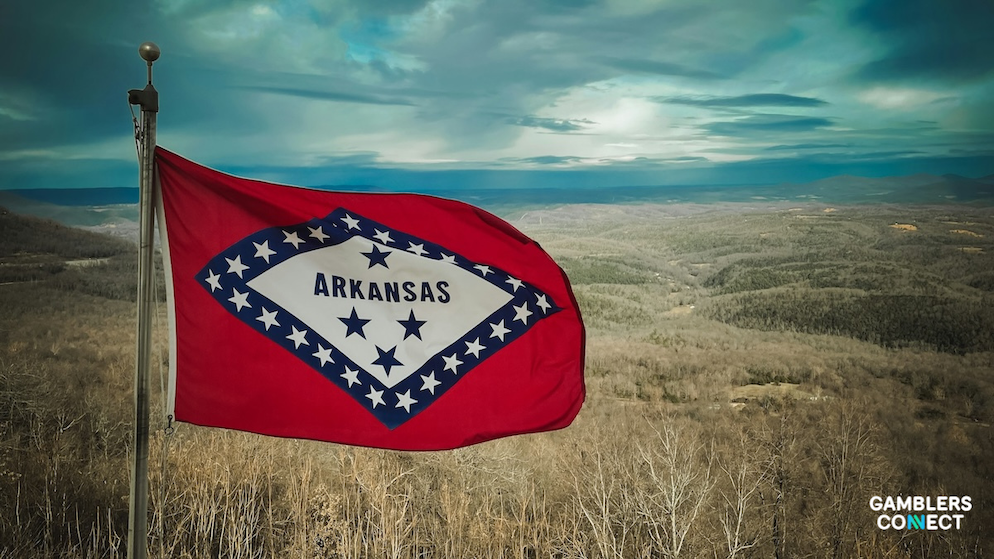
In a move that signals a potential end to the dominance of local casino-led platforms, national giants DraftKings and FanDuel have officially applied for mobile sports betting licenses in Arkansas.
The move, confirmed by the Arkansas Department of Finance and Administration, could dramatically reshape a market that has historically struggled to achieve its full revenue potential due to unique regulatory constraints.
Overcoming the 51% Revenue-Share Barrier
Arkansas has long been a “national gap” for major sportsbooks primarily because of its mandatory 51% revenue-share requirement.
Unlike most states where revenue splits are negotiated privately, Arkansas law mandates that third-party operators allocate over half of their revenue to their local casino partners. This structure significantly compresses profit margins, previously deterring entry from high-volume national brands.
However, the recent applications suggest a shift in strategy for these operators. Scott Hardin, spokesperson for the Department of Finance and Administration, told KNWA/FOX24:
“If approved, the companies could partner with any of the three licensed casino sportsbooks in Arkansas… [and] could begin operating in the state immediately.”
According to reports, DraftKings is expected to partner with Southland Casino in West Memphis, while FanDuel is slated to join forces with Oaklawn Casino in Hot Springs.
Market Potential and Competitive Positioning
The lack of national competition has left Arkansas trailing its neighbors. In 2025, the state’s total handle was roughly $655 million. By comparison, Iowa, with a similar population, generated approximately $2.9 billion in the same period.
The decision by DraftKings and FanDuel to enter now, rather than leveraging their prediction market platforms, indicates a deliberate push into the formal regulated market. Currently, neither operator offers sports event contracts on their prediction platforms in Arkansas, focusing instead on financial and commodity markets.
If regulators approve the applications, which could happen as early as next week, Arkansas bettors will finally gain access to the same industry-standard interfaces and promotions available in most other legalized states.