
Colombia Redefines Gambling Regulation with New Tax Reforms and Product Expansion

by Dimitri Dimitrov Published on January 29, 2026
Editorial Standards

☆ Editorial Standards

All news content is produced by qualified journalists and analysts under a published editorial code requiring accuracy, source verification, and editorial review prior to publication.

Advertisers and commercial partners have no influence over news coverage.


News editorial policy · Contact us
✓ Fact-Checked

✓ Fact-Checked

Every article undergoes senior editorial review.

Regulatory and legal reporting is cross-referenced against primary sources including official government and regulatory authority records.

Corrections are issued transparently with a visible update notice.


News fact-check policy
⊘ Independence

⊘ Independence

Gamblers Connect is a B2B iGaming media platform.

Editorial decisions, including what to cover, how to cover it, and what to publish, are made independently by our newsroom.

Commercial partners may purchase publication frequency but cannot influence editorial tone, angle, or content.


News independence policy
↗ Commercial Disclosure

↗ Commercial Disclosure

Gamblers Connect is a B2B media platform. We generate revenue through subscriptions, B2B referral partnerships, directory listings, advertising, and media services.

Gamblers Connect is not a licensed gambling operator, affiliate, or player acquisition channel in any jurisdiction.

We do not earn revenue from player activity, wagers, or deposits.


News commercial disclosure · Contact us
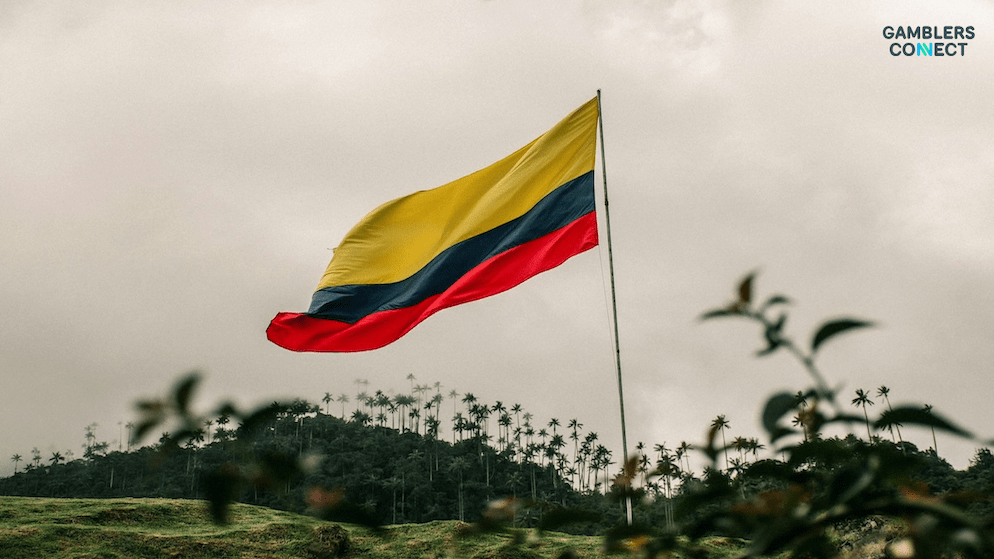
A scenic view of the Colombian flag, symbolizing the robust growth of the betting industry which contributed over COP 1.06 trillion to the national health system in 2025.

The Colombian gambling sector is undergoing a transformative regulatory shift aimed at ensuring operator sustainability while boosting contributions to public health. Marco Emilio Hincapié, President of Coljuegos, recently outlined the strategic tax reforms and legislative updates that are set to redefine the industry in 2026.

Shift to GGR-Based Taxation 

A central pillar of this “redefinition” is the tax reform introduced in Decree 1474 of 2026. Responding to industry demands for a fairer fiscal framework, the new model changes the tax base for online operators from total bets to Gross Gaming Revenue (GGR).

Hincapié explained the rationale behind the shift:

“A more dynamic and profitable sector tends to grow, operate within legality, and expand the tax base. And it is in the healthcare system where this growth will translate into more resources, as has been the historical role of gaming in Colombia.”

Modernizing the Portfolio 

Coljuegos is also diversifying the market with regulated offerings. The formalization of raffles (Decree 1486) is projected to generate COP 70 billion annually for health transfers. Additionally, the regulator is advancing the launch of Keno, with expected revenues of COP 480 billion over five years, and revitalizing virtual sports race betting (ACDV).

Robust Sector Growth 

Despite economic challenges, the sector’s performance remains strong. In 2025, the industry contributed over COP 1.06 trillion to the health system. The President of Coljuegos noted that betting volumes surged by 25% in December 2025 compared to the previous year, dispelling fears that tax debates would slow the market.

“Never before has so much been wagered in the country,” Hincapié stated, predicting further growth driven by the 2026 FIFA World Cup.


Dimitri Dimitrov

Dimitri is an iGaming expert with nearly a decade of experience and a knack for crafting content that speaks directly to the iGaming crowd. He understands affiliate marketing, player psychology, and search algorithms, which enables him to write engaging, data-driven articles.

Sources
Source documentation not yet available for this article
Our editorial team is in the process of verifying and documenting sources for this content.
Mentioned in this Article